
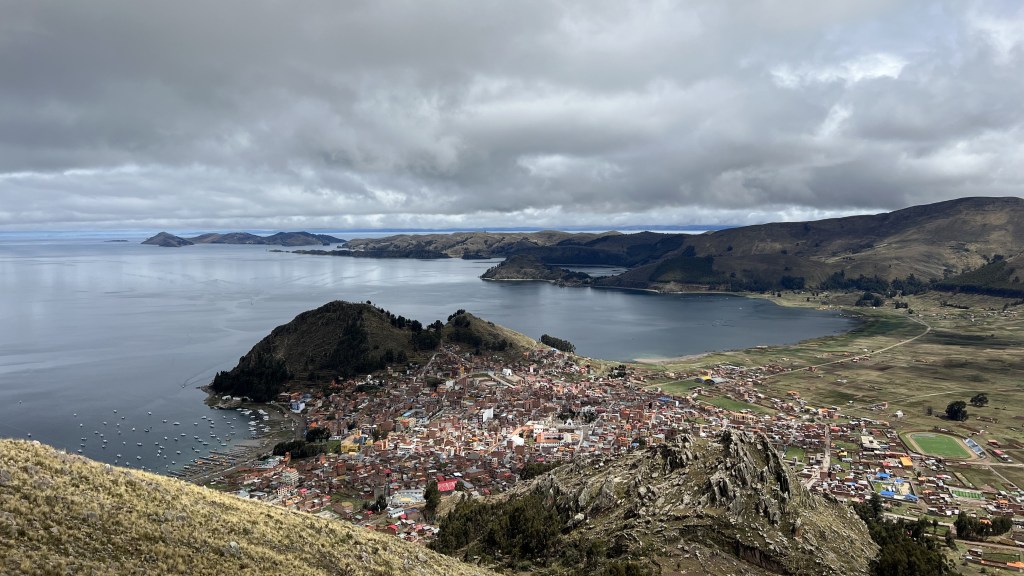
Copacabana is a small town on the shores of Lake Titicaca in Bolivia. Situated between the coast and the mountains, the religious centre attracts visitors above all with its beautiful landscape. Boat trips to the surrounding islands are also popular with tourists. Some of them also have a special cultural significance. And I had the chance to visit one myself.
Nevertheless, the place is rather unknown. I didn’t know beforehand that Copacabana doesn’t just exist in Brazil. The reaction was quite similar when I told others about the city. Most people assumed that I was travelling on to Rio after visiting Peru. In this article, you will find out whether Copacabana in Bolivia is just as worth a visit.
The Arrival
After another quick breakfast at Inka’s Rest Hostel, I was picked up by my shuttle taking me to the bus terminal. After spending two nights in Puno, I was ready to continue my journey with Peru/Bolivia Hop. (You can specify your accommodation when you buy your ticket or during your journey. At most destinations, you will then be picked up by a shuttle directly at your accommodation).
We drove along the coastline of Lake Titicaca towards our next destination. Before that, however, we had to cross the border, which was quite an experience. Because you can’t just drive straight over the border here.
On Peruvian territory, we had to leave the bus to obtain the exit stamp at a small office. We were also able to exchange some money there. In Bolivia, you pay in Bolivianos. One euro equals about seven bolivianos.
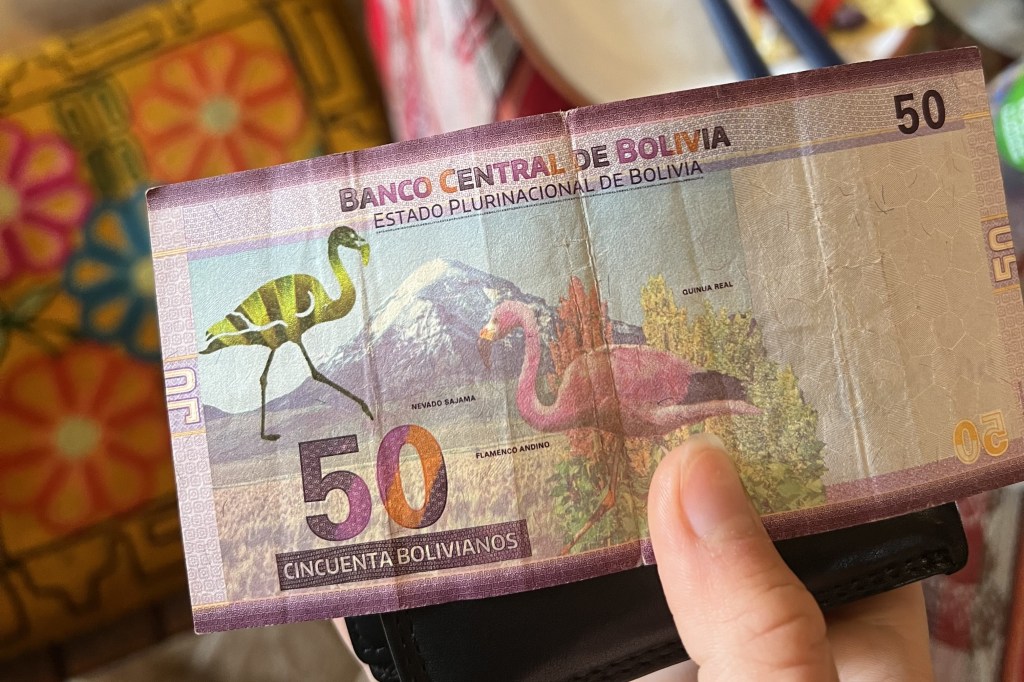
We then had to cross the border by foot. For a brief moment, we found ourselves in two countries at the same time.
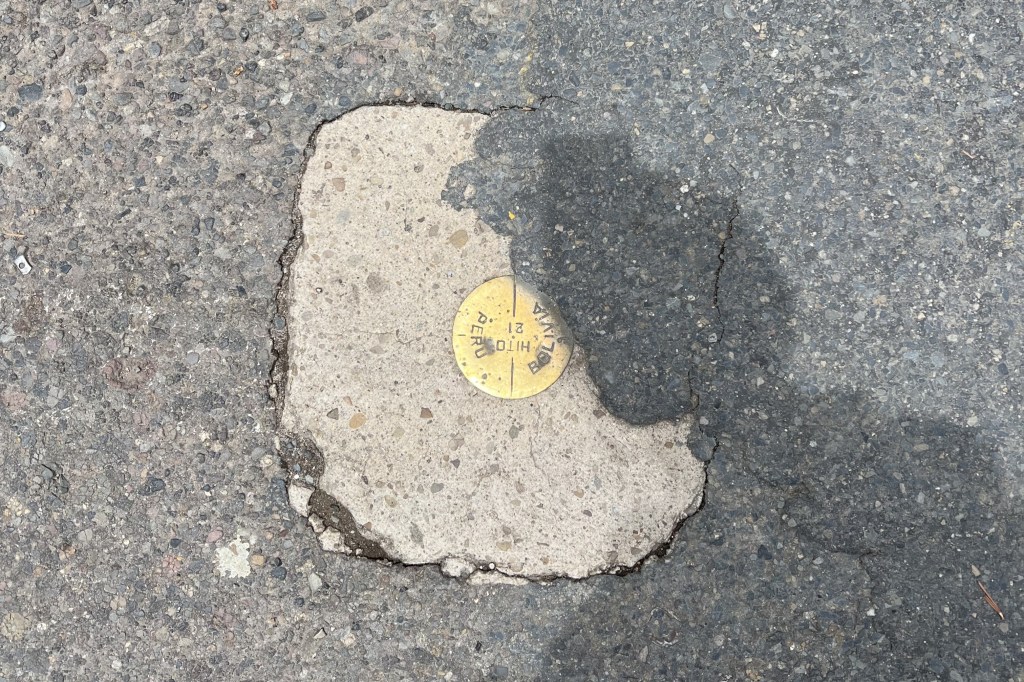
Then all we still needed was the entry stamp. The next bus was already waiting for us on the Bolivian side of the border. As different vehicle regulations apply in Peru and Bolivia, we couldn’t simply cross the border with our vehicle. The bus in Bolivia was a lot smaller, with hardly any legroom, and generally a little less luxurious.
Fortunately, everything worked out and nobody had to stay behind. On this exciting border crossing, I once again realised how privileged we are as members of the European Union. While other travellers from the States or Asian countries have to travel with numerous documents and the exit and entry process at the border is far more time-consuming, I only had to present my passport and could simply cross.
However, once everyone had made it to the other side, we continued along the lake, now on the Bolivian side. We arrived in Copacabana around lunchtime.
Day 1:
After arriving, we had a delicious lunch. On the bus, we were offered a meal at a reduced price at Taipi Uta coffee bar. My veggie dish was actually quite tasty (I’m not sure anymore what it was). However, the next day I heard from some people that they had caught food poisoning after eating at the same restaurant. I already mentioned in my last post that this is not uncommon in Peru and especially Bolivia. In any case, I cannot recommend this restaurant. It’s also always good to know where you should rather not go 😉
My large luggage was stowed well in the bus. Before heading to my accommodation for the night, I had a little excursion planned. For around ten dollars, excluding entrance fee, you can enjoy a boat trip to Isla Del Sol (Island of the Sun) with Bolivia Hop. Together with a few other people from the bus, we embarked on a wobbly boat trip lasting around an hour and a half. If you are prone to seasickness, I would definitely recommend a seat on the deck. It can get a bit chilly up there, but never underestimate the intensity of the sun. After all, we are still over 3,800 meters above sea level.
During the ride, I met a nice Dutch woman who told me that there are so many Dutch people travelling in South America that they even have their own WhatsApp group. Just for people from the Netherlands who are travelling through South America. If there was such a group chat for Austrians, it probably wouldn’t have that many participants. I also met a Scottish couple who I would meet again at my next destination.
From the dock, a short path led to a small temple, which we visited first. After we had paid our entrance fee for the island to a couple of locals (no idea how much it was exactly), we walked along the coast for a while, passing some beautiful viewpoints on the way. Otherwise, the tour was rather uninteresting. Our guide didn’t tell us a lot about the island.
Isla Del Sol is said to have been the home of the most important god of the Incas, the sun god. Legend has it that he created the first two Incas there, who went on to found the city of Cusco and thus the Inca Empire. This place therefore has a special significance for the indigenous population.
However, as we didn’t really learn much about this history during our tour, I would recommend exploring the island on your own. To do this, simply take one of the many boats to the island and follow one of the hiking trails while enjoying the beautiful landscape.
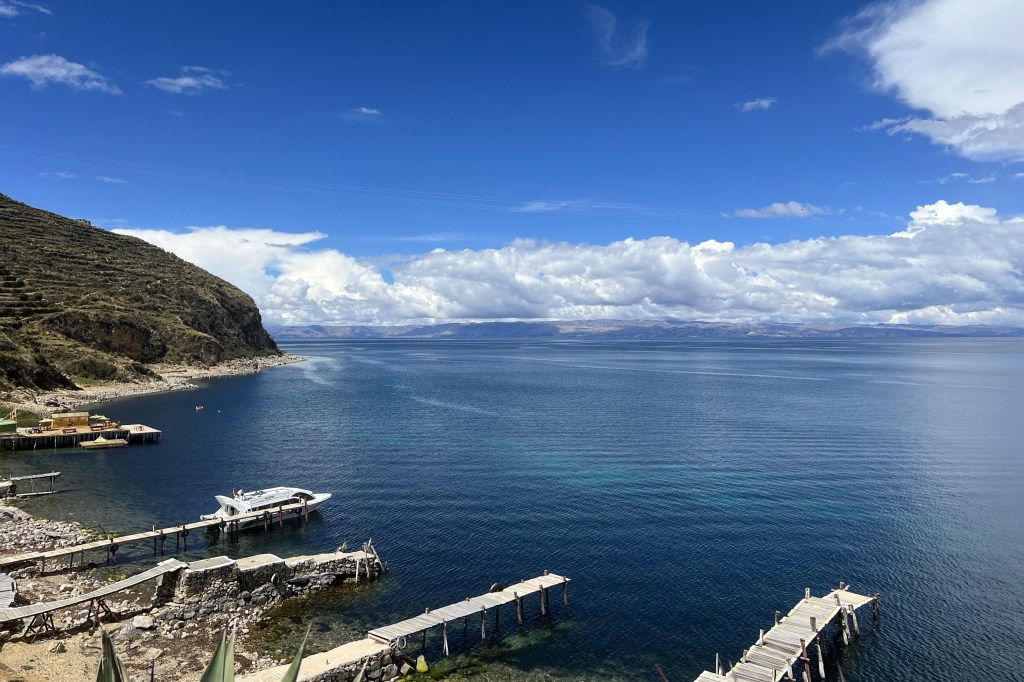


After our approximately one-hour walk, we went back on board at another pier and headed back towards the mainland.
The Accommodation
While some of the others directly took the next bus to continue their journey, I headed to Hostel Sol y Luna with my luggage. Copacabana isn’t particularly big, so the walk wasn’t very long.
After staying in dorms at my last two destinations, I decided to treat myself to a single room today. But only because the price difference wasn’t particularly great. However, I wasn’t really happy with the accommodation. Although the room was quite nice, obviously not luxurious, I felt anything but comfortable. The room smelled extremely of some kind of chemical cleaning agent. Consequently, I didn’t sleep particularly well.
But even worse was the shower. There were only two temperature settings. Either cold or hot, but then really hot. As I am a pretty frosty person and the temperatures in Copacabana were rather average, I opted for the boiling water. When I went to turn the tap off again at the end, the shower head suddenly started emitting steam. Of course, I immediately got out of the shower and out of the bathroom for fear that something was about to catch fire. Fortunately, it stopped after about a minute. Nevertheless, I didn’t touch the shower again.
As I didn’t feel particularly comfortable in my room, I spent the evening outside. First I went for another walk to the harbour, where I watched the sunset.

Afterwards, I started feeling hungry again. At Jardin Bolivia you have a really nice outdoor seating area, and you can enjoy delicious food for very little money (without food poisoning). As always, I had a menu with soup and a vegetable rice for the main course. With a full or rather overfilled stomach, I went back to my fantastic room.
The only luxury in my accommodation was having my very own TV with Netflix. Of course, I had to enjoy that. And as Christmas was just around the corner, I had to watch a Christmas movie. But I didn’t get to the end because I was far too tired again.
Day 2:
Breakfast at the hostel was okay, but not particularly impressive either. So I can’t really give a recommendation for my accommodation either.
As I still had until the afternoon before the bus would take me to my next destination, I used the morning to go for a hike. Some of you may have already noticed that I always like to see my destinations from above.
I set off alone in the direction of Cerro San Sebastián, but soon I found company on four paws. Of course, caution is always advised when it comes to street dogs in South America. However, I have also had some very good experiences. Today was no exception. At the beginning of my hike, I came across a few dogs, but this one didn’t want to leave me alone anymore. He accompanied me all the way up to the top of the mountain. There we looked at Copacabana from above together and he even got some of my snacks as a reward. Even when I wanted to go up another hill, I couldn’t stop him from coming with me. And so he joined me to the very bottom again before we went our separate ways again.
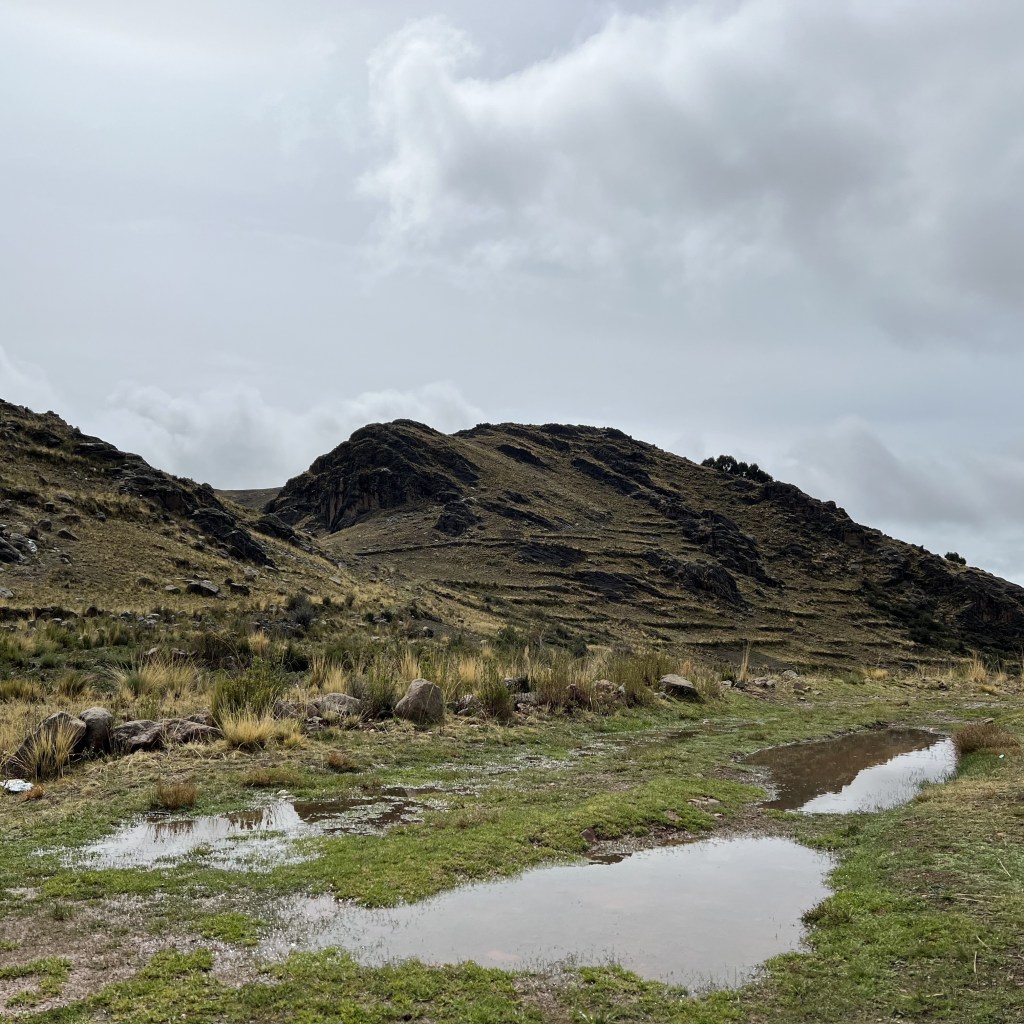


For a midday snack, I ordered a kind of Crepe at Jardin Bolivia. Only it was much thicker than a regular one and topped with plenty of chocolate sauce. In the meanwhile, I used the remaining time to talk to a good friend on the phone.
I then bought a good bread roll at the market, a luxury after the rather strange bread in Peru, and half an avocado. The avocados here are almost as big as my head, so half an avocado was more than enough. They also taste a lot better than at home. Anyway, that would be my snack for the ride.
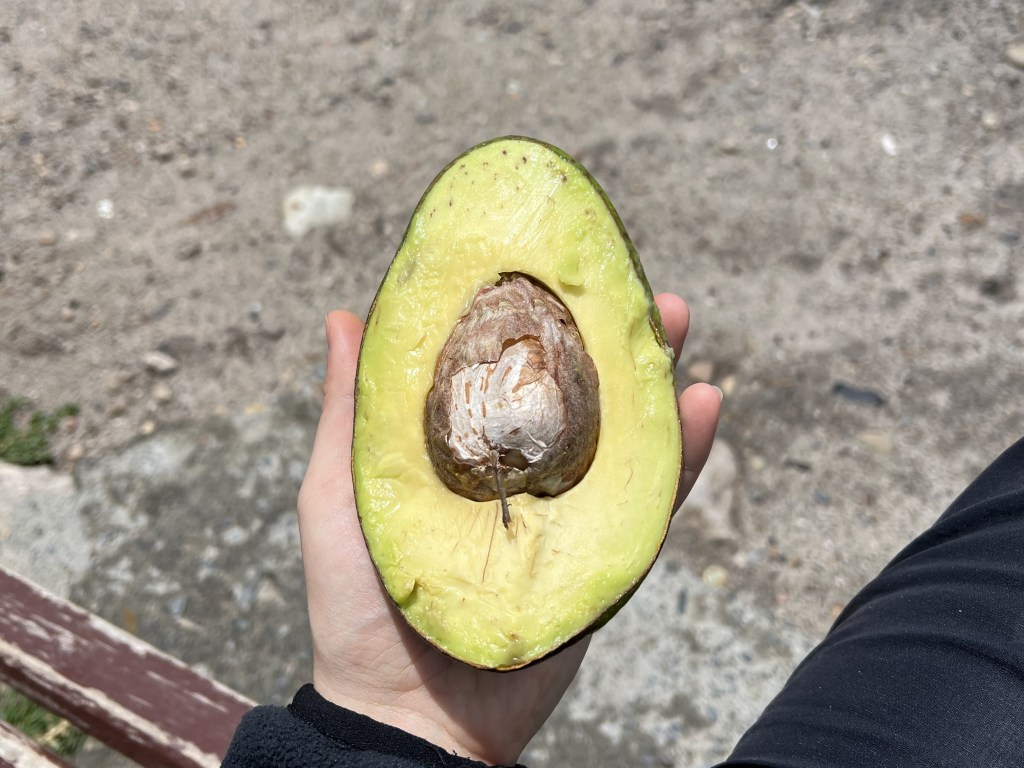
In the afternoon, I took the bus to my next destination.
My conclusion
It’s almost a miracle that I was able to think of so much to say about my stay in Copacabana. To be honest, this destination is not particularly exciting. The main attraction, the Isla del Sol, didn’t really blow me away after my visit to the floating Urus Islands in Puno. The range of activities on the mainland itself is not particularly extensive. Relaxing on the shore or a short hike in the hills are actually the only two options. Along the main road you will find a few restaurants where you can enjoy Bolivian dishes as well as international cuisine.
But that was about it. My little hiking trip with my furry companion probably made my stay a little more memorable. It might have also been a good idea to take a little break from all the touristy tours. At least I got some peace and quiet and time for myself again.
As I sat on the shore of Lake Titicaca on the first evening, a young man approached me and asked me for a short interview. The tourism student was researching how to make Copacabana more attractive for tourists as part of his final thesis. So if you’re going there in a few years, you might find a completely different Copacabana.
In any case, I wouldn’t spend more than one night here. And the city is hardly comparable to Brazil’s Copacabana. Before arriving at my next destination, however, this opportunity to relax was probably not such a bad thing. I’ll be able to report on some more exciting experiences in my next post. Until then,
Bussi Baba!
 Bussi Baba
Hinterlasse einen Kommentar