
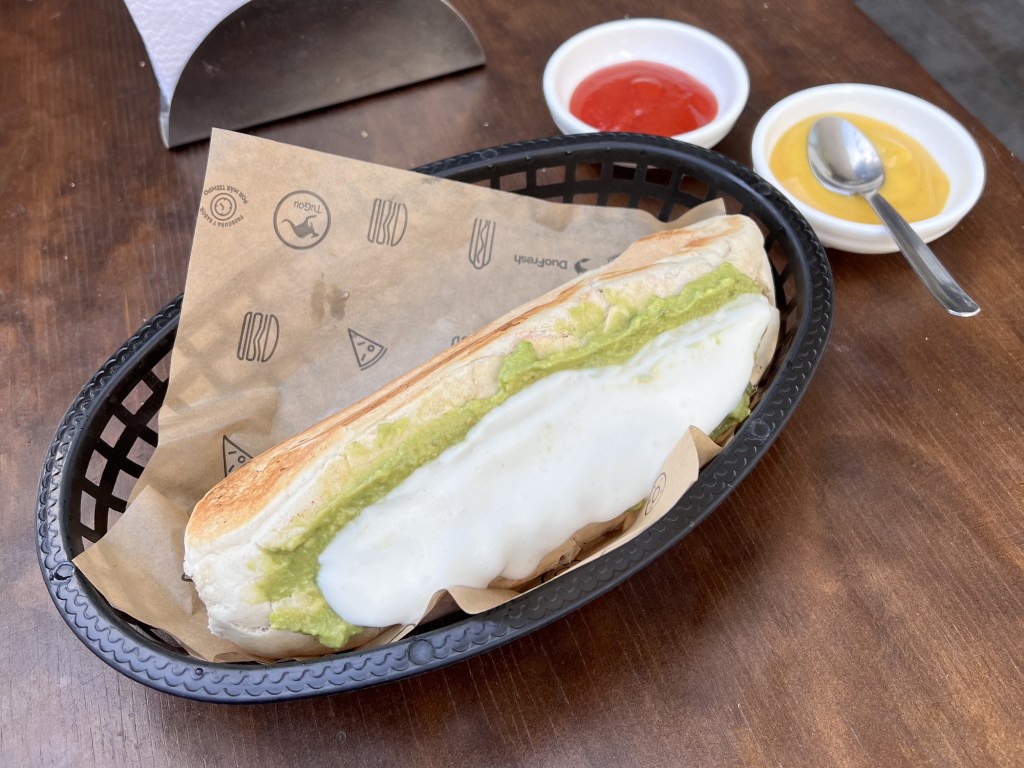
But before you get the wrong impression of South American cuisine, I must clarify that Chile is a clear outlier. In other words, the black sheep. In general, Latin American gastronomy, apart from Peru and perhaps Argentina, is not particularly renowned internationally. If you are served beans and plantains every day in Colombia, you might soon become bored. And yet you can’t travel to South America without trying the country’s typical dishes. A typical casado in Costa Rica, bandeja paisa in Colombia or asado in Argentina (usually also available as a vegetarian option). I wouldn’t advise you not to give the Chilean cuisine a try. Just be prepared for a very … interesting taste experience, a rollercoaster ride of flavours.
At this point, I also have to say that overall, my personal gastronomic experience in Chile was good. As I’ve already mentioned, I stayed with a host family during my time at university. And I really can’t complain in that respect. I was only cooked vegetarian meals, my host mum ensured that I always got my protein and it tasted delicious. Traditional Chilean dishes were rarely served.
La Empanada Chilena
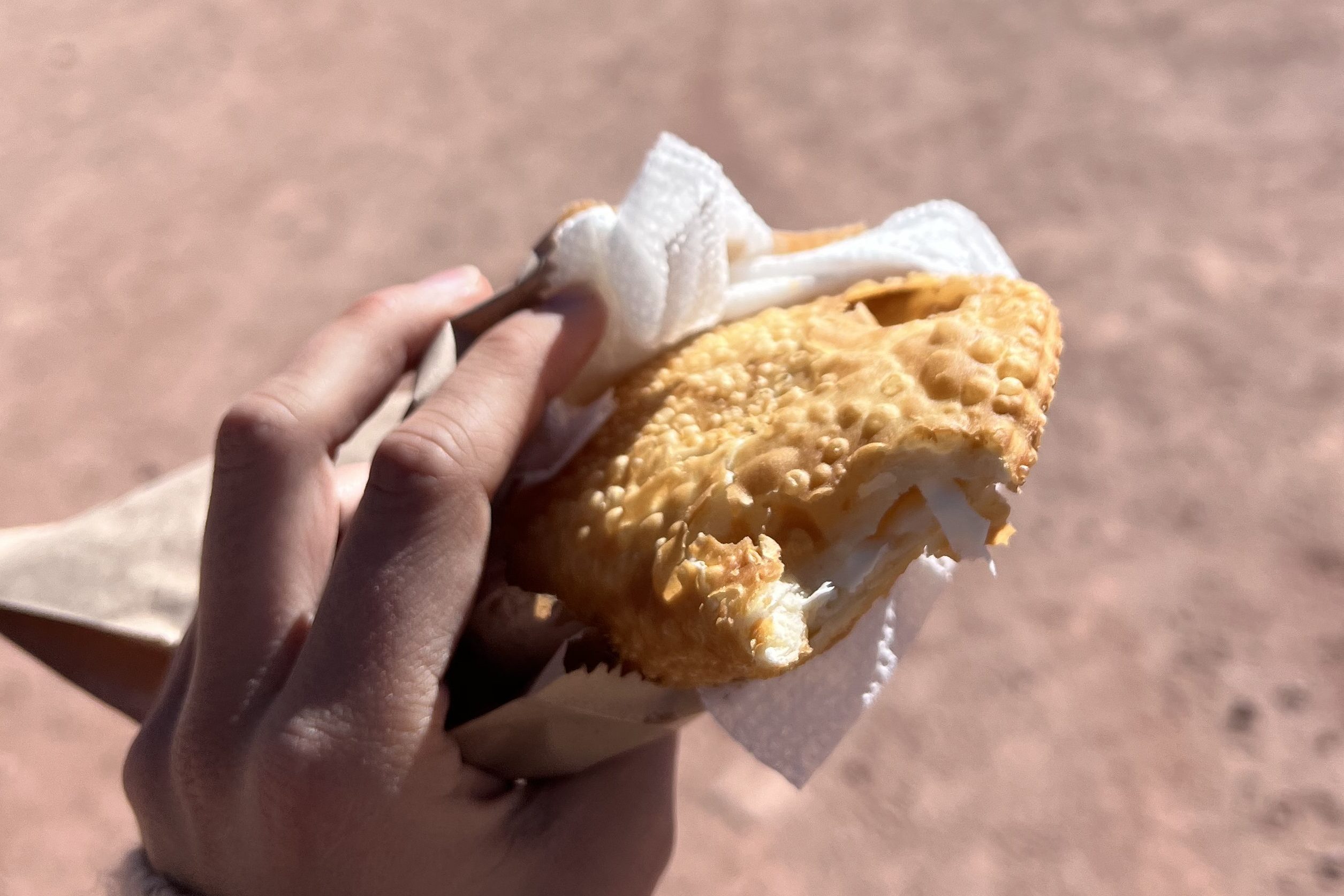
And before I start talking about gastronomic missteps and horror stories, a little praise for Chilean cuisine. In principle, empanadas can be found in every country in South America, in the most diverse forms and variations. However, Chilean empanadas are and remain the best. That’s why „empanadas chilenos“ are also sold in many other countries. I can’t describe exactly what makes these filled dumplings so special in this country.
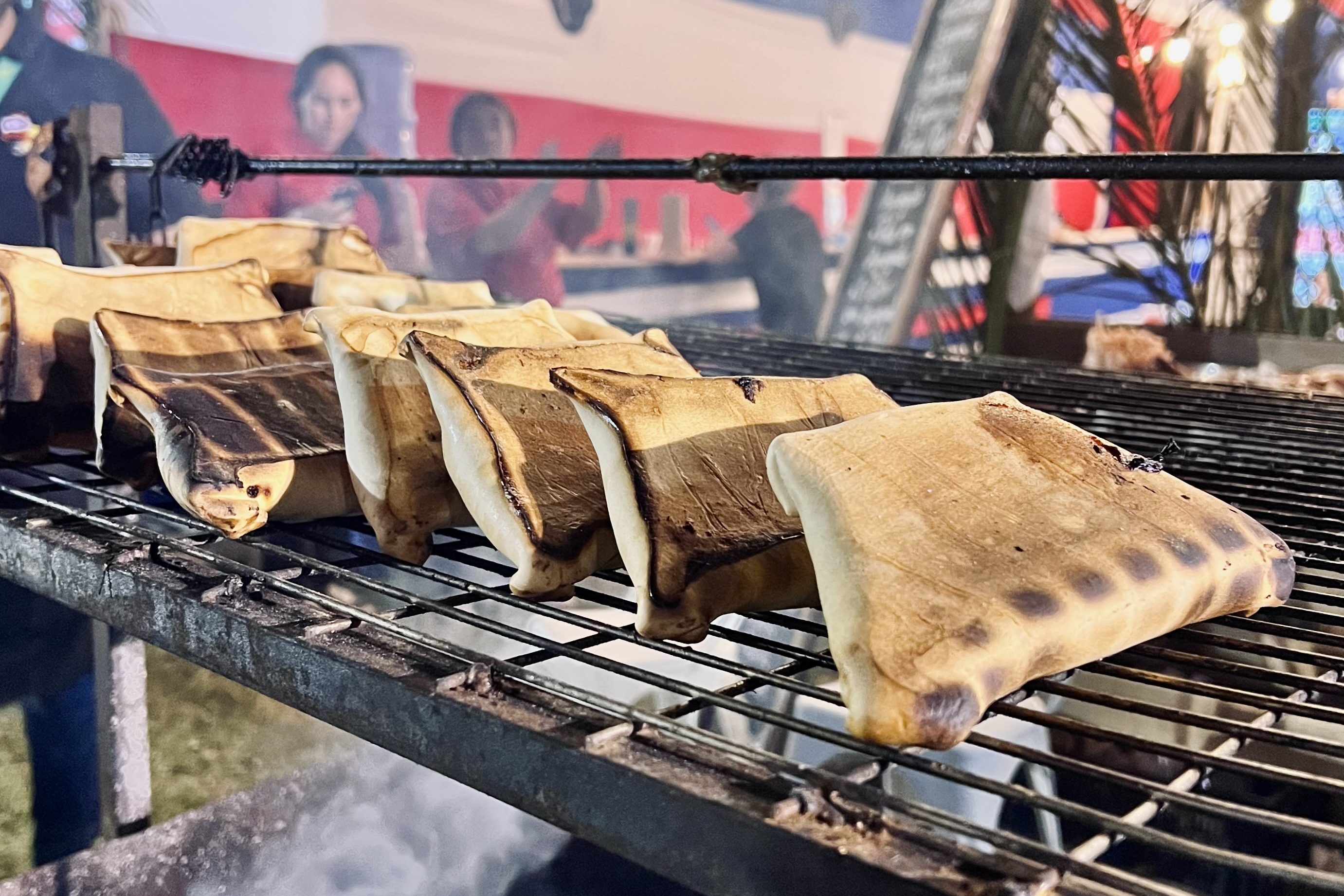
In contrast to the classic empanadas of other countries, Chilean empanadas are usually baked in the oven, so-called „horneadas“. However, the deep-fried version is also commonly offered. The most traditional filling is found in the Empanada de Pino. This consists of minced beef, olives, egg and dried grapes. Another very interesting combination. However, I tested the vegan option for you and was actually very pleasantly surprised. Other classic variations are empanadas napolitanas with ham, cheese, corn and tomatoes, jamón or camarón y queso, which is ham or prawns with cheese, or just queso for the vegetarians among us. However, my very best empanada during my entire stay in South America was in Atacama Desert, deep-fried and filled with goat’s cheese. Yummm…
El Choclo
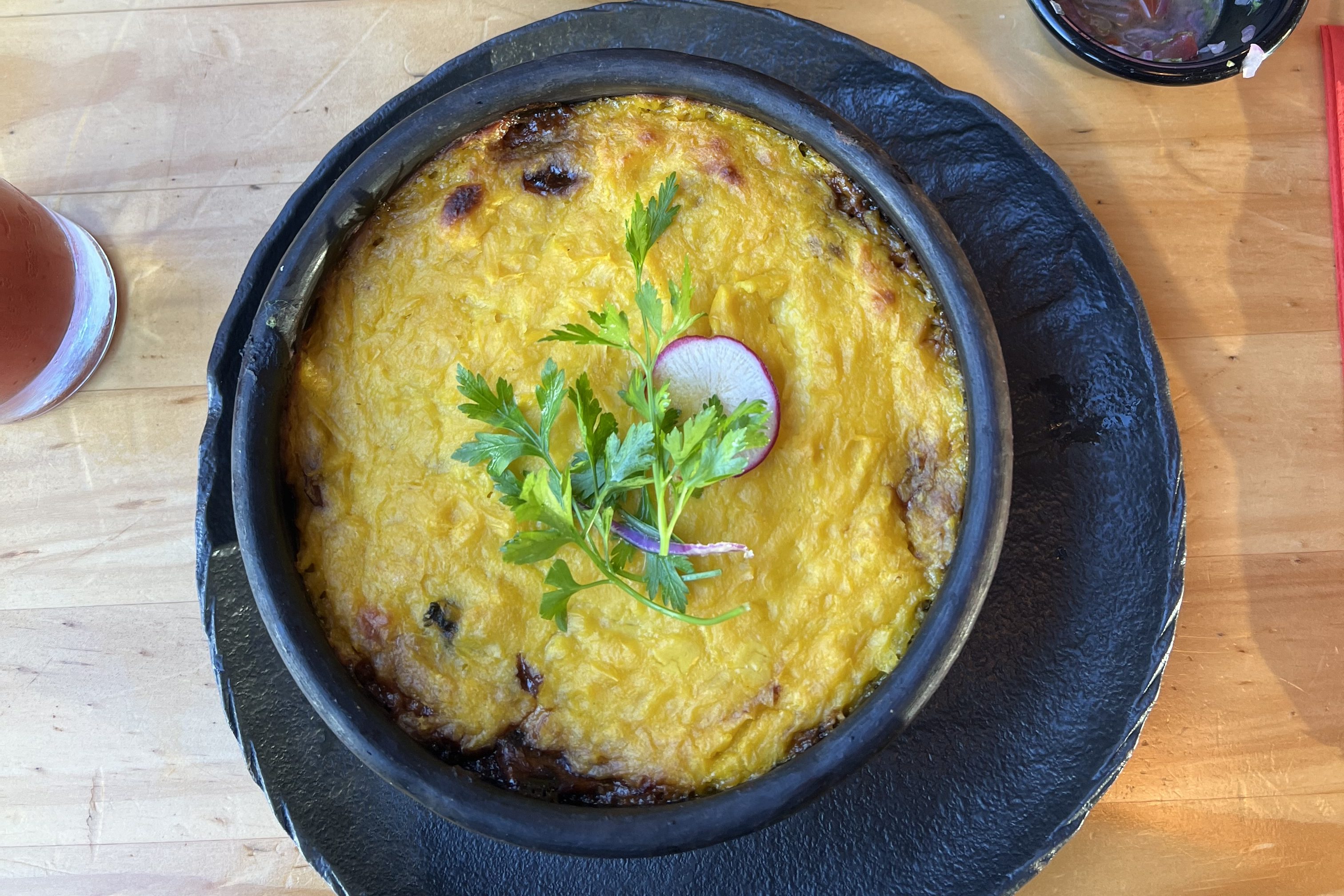
Unfortunately, the Chileans have not put as much love or thought into all their traditional dishes as they have into their empanadas. Corn, choclo in Chile, is often turned into corn porridge and used to make humitas, among other things. Humitas, similar to tamales in Mexico, are corn porridge cooked in corn leaves. In Chile, they are usually prepared without filling and enjoyed with salt or sugar as an accompaniment to savory dishes.
Then there’s Pastel de Choclo. Similar to the British Shepard’s pie, a mixture of minced meat, which resembles the filling of Empanadas de Pino, is topped with corn porridge and baked. And big surprise, here, too, some Chileans go wrong with the sugar.
I actually found my host mum’s veggie Pastel de Choclo very tasty. Shortly before I left Chile, I gave a friend a little tour of Viña and of course Chilean food was a must. We went to a traditional restaurant and on my recommendation she ordered the pastel de choclo. Probably a mistake. The chef must have taken the fact that the dish can be translated as „corn cake“ a little too seriously. And so the dish was more like a sweet dessert with meat.
El Pan Chileno
In fact, while writing, I realised that Chilean cuisine deserves some more credit. It’s probably not news to anyone that you can’t find bread like ours anywhere in South America. After all, you can only get this in Austria and Germany. And yet Chile has still managed to prepare by far the best pastries in Latin America. This comes suspiciously close to our bread rolls and, unlike bread rolls in other countries, is not sweet for once. In Bolivia, for example, you are served „bread“ with your breakfast egg, which in Austria would be called a „Striezel“ (a sweet brioche).
La Comida Básica (Food Staples)
Pebre – A typical food staple that is served with almost every dish throughout South America is medium-hot to hot tomato salsa. I’m a huge fan of it because it gives even heavy dishes a little more lightness and fresh flavour. Although the salsa has a different name in each country, the ingredients differ only slightly. Here is a brief overview:
- Pebre (Chile) – Often served as an aperitif with bread.
- Salsa Criolla (Peru and Argentina)
- Llajua (Bolivia)
- Pico de Gallo (Mexico) – Probably found on almost all tacos.
- Ají (Kolumbien) – Not to be confused with the chilli variety Ají.
- Tamarillo (Ecuador) – Prepared with tree tomatoes.
Merken – Chileans not only use salt – and occasionally sugar – as a seasoning, but also Merken. Merken is a spice that consists mainly of chilli peppers, which are smoked over charcoal, ground and then mixed with other spices. This mixture is said to have been used already by the indigenous Mapuche people. Although my tolerance level for spicy food is rather low, I fell in love with the smoky flavour of Merken. However, the spice also has a rather low heat level. On our kitchen table the phrase was always „me pasas el merken, porfa“, which means „can you please pass me the merken“. (Thank me for the little Spanish lessons at the latest when you’re travelling to South America yourself 😉 ).
Salads – If you order a side salad in Chile, don’t be surprised, it won’t be marinated like the classic salads in Austria. Normally, a piece of lemon is served with the salad. At least that’s how it always was with my host family. You will then find salt and oil at the table. As an Austrian who was used to ready-made marinades and thick dressings with lots of vinegar and a little sweetness, it was a bit of a change at first. But you won’t find this in any South American country. I will have to get used to it again in Austria. The most typical salad is Ensalada Chilena, a tomato salad with lots of onion.
Avocado – Another important food staple in Chile is the avocado. According to my host family, you can find the very best in Chile. I can’t quite agree with that. Nevertheless, I really enjoyed eating avocados for the first time without a guilty conscience, as the fruit is native here. And that’s why I ate avocado bread almost every day. You may even have come across a Chilean avocado when shopping in European supermarkets. My host mum once heard on the news that they cost just as much or are even cheaper in Austria than in Chile, despite the long transport. It’s a crazy world.
Mayonnaise – I almost forgot, but mayonnaise is probably the most important food staple in Chile. Just like soya sauce (see article on Santiago), mayonnaise is served with pretty much everything. Even the two typical dishes, completo and handroll (see article on Viña), cannot do without mayo. So it’s no wonder that in large supermarkets you’ll find an entire aisle just with mayonnaise.
And whilst we’re already on the subject of healthy foods, let’s move on to the sweet sins.
Los Postres
In general, you could say that Chileans simply love sweet food. If savoury dishes are not seasoned with sugar, they are at least followed by an extremely sweet dessert.
But here, too, I have to praise the fact that Chilean ice cream comes very close to Italian gelato, as I have already mentioned in previous posts. But ice cream, which is available all year round, is not the only sweet temptation in Chile.
Dulce de leche, which is also popular in Spain and other South American countries, is known as manjar in this country. For those who do not know, this is a caramel-like milk cream that can be spread on bread like Nutella. In Chile, the cream is also used for numerous cakes and tarts. For example, in Torta Chilena or „Torta de mil hojas“, meaning „thousand sheets cake“. It consists of many levels of cake dough with a layer of manjar between each. No such thing as fresh, fruity cakes and desserts.
Another traditional dessert are Sopapillas, small deep-fried dough rounds containing pumpkin and other ingredients. These are sprinkled with sugar or served as Sopapillas Pasadas in a sweet sugar sauce. The dough pieces can also be enjoyed savoury with pebre (see above).
When it comes to sweet pastries, Chileans also like to take inspiration from other countries. Berlines Chilenos are very similar to the Austrian „Krapfen“ or the German „Berliner“. The only difference is that they are cut open and usually filled with some sort of custard cream, but are also available with jam, hazelnut cream and manjar. Of course, they cannot be compared with the Austrian „Faschingskrapfen“ with apricot jam.
You are also likely to come across the word „Kuchen“ in bakeries and patisseries. Throughout Chile, but especially in the south of the country, „pastel“ (cake in Spanish) is actually sold under the german word “ Kuchen“. This is due to the fact that many Germans, Austrians and Swiss settled here many years ago and have therefore also had an influence on traditions and language. In Chile, the word „queque“ is also commonly used for cake and „panqueques“ for pancakes or pancakes.

If you don’t like it quite that sweet and want to watch your waistline (which is probably rather difficult in Chile in general), you might prefer a piece of fruit. In general, the range of fruit and vegetables on offer in Chile is pretty similar to ours. After all, Chile has roughly the same climate as southern Europe. My host mum didn’t quite understand this. When she bought nectarines once, she said „Ahh, you don’t know that“ and wanted to explain to me the best way to eat them. However, there was one fruit that I had never actually seen here before and it was a favourite with all the exchange students: Chirimoya. You could compare the flavour to a mixture of apple and banana. You can find them everywhere in South America, in different sizes and shapes and under different names.
El Desayuno
In contrast to most other American countries, the difference between the Chilean and Austrian breakfast is not that big. In Colombia, Costa Rica, Guatemala etc., you start the day with a very hearty meal, such as eggs, fried plantains and beans with rice. In Chile, you are more likely to have a simple bread with butter and jam or an egg and some fresh avocado. A typical breakfast in a café would be two medialunes, a miniature version of a croissant, with coffee or black tea. People also drink tea with milk in Chile. However, here you put the tea bag directly into a glass of hot milk.
Once
Dinner also differs from the „cena“ in all other South American countries, and not just in name. „Once“ would be translated as eleven, but this is based on a completely different story. My university professor once explained to me that housewives used to meet for „tea time“. However, they actually consumed aguardiente, an alcoholic drink. To keep the whole thing secret, they described it with the number of letters of the word „aguardiente“. Today, people actually drink tea in the late afternoon or evening and eat a snack to accompany it. Dinner takes place at around six o’clock and usually consists of cold food, such as bread with butter, avocado or cheese, and is therefore similar to the Austrian one.
Las Bebidas
I have already mentioned some drinks in my article on Santiago de Chile. Some of you may have also heard that Chilean wine is very well-known and popular on an international level. But grapes are not only turned into wine here.
Pisco is a brandy drink and probably the favourite alcohol of young and old. Whether it’s on a night out, in a club or as an apéritif on a Sunday. In four months, most exchange students have probably drunk so much Pisco that nobody wants to see it anymore. Mixed with lime juice, sugar syrup and egg white, you get pisco sour, a usually very dangerous cocktail – because it’s super strong but super tasty.

When going out, however, you are more likely to find the low-budget variant called „Piscola“, pisco mixed with coke or Sprite. Beware, even with this mixture, they usually don’t skimp on the alcohol. So maybe you’d prefer it straight?
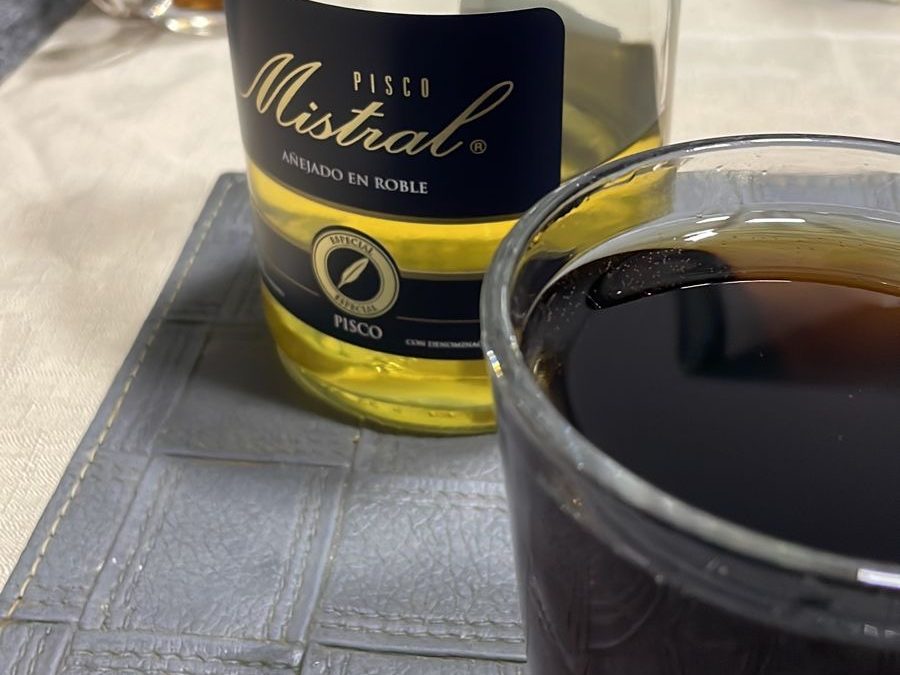
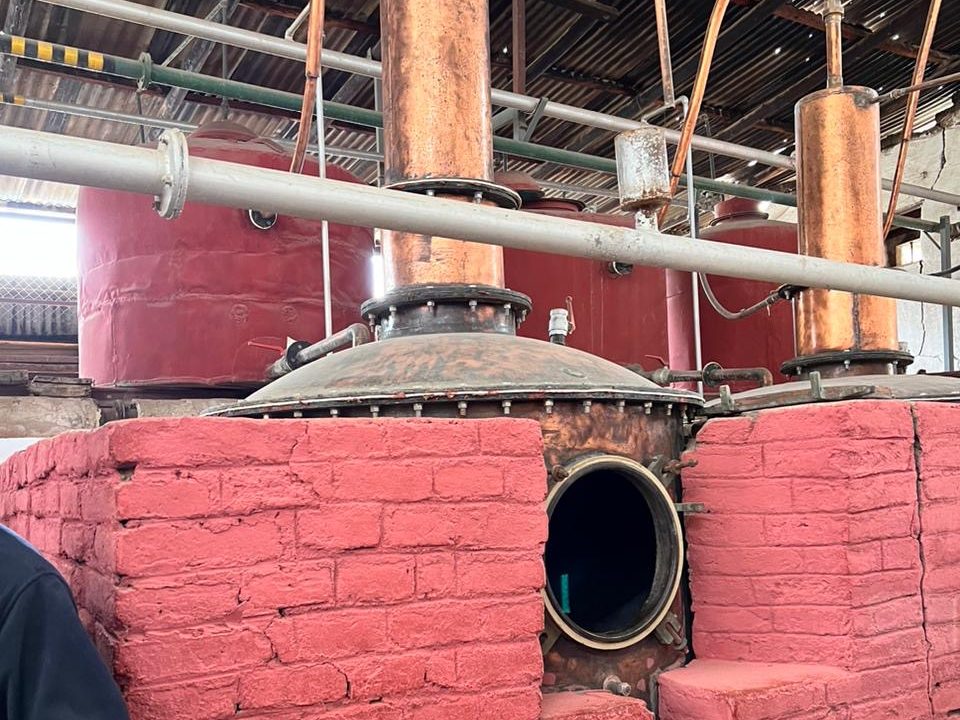
But what makes Pisco particularly interesting is its history. Whether Pisco originally comes from Chile or Peru is a point of controversy that has been the subject of debate for years now. In both countries, there is a place called „Pisco“ where the drink is said to have originated. And only if the alcohol is produced in these two regions of the world can it be sold as Pisco. Just like champagne has to come from the Champagne region. After hearing many stories and arguments, I would side with Peru. But make up your own opinion. In any case, both in Peru and in Chile, if you’ve been to the country without trying Pisco, then you haven’t been there.
Quick fact: Only certain grapes may be used to produce Pisco. One of these is the Austrian Muscat grape.
El Terremoto
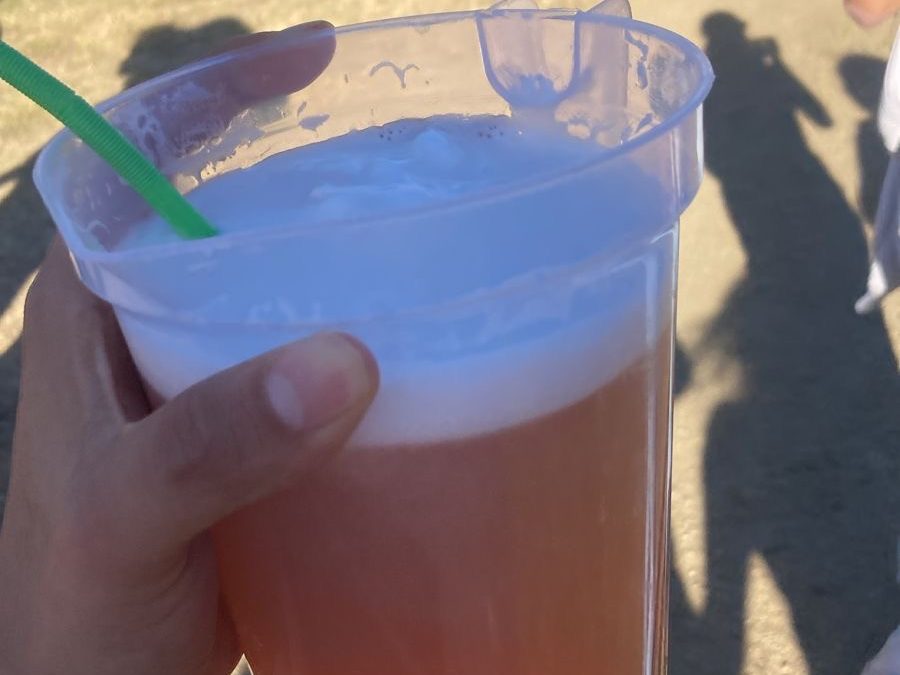
And now for a drink that is mainly consumed during the Fiestas Patrias, the Chilean independence celebrations. It’s not just the ingredients that are interesting here, but also the name. Terremoto is a mixture of Pisco or a special Chilean wine, grenadine and pineapple ice cream. As you might have guessed, the drink is super sweet. Terremoto translates as earthquake. So, if you have too much of this sweet juice, you might experience a personal earthquake.
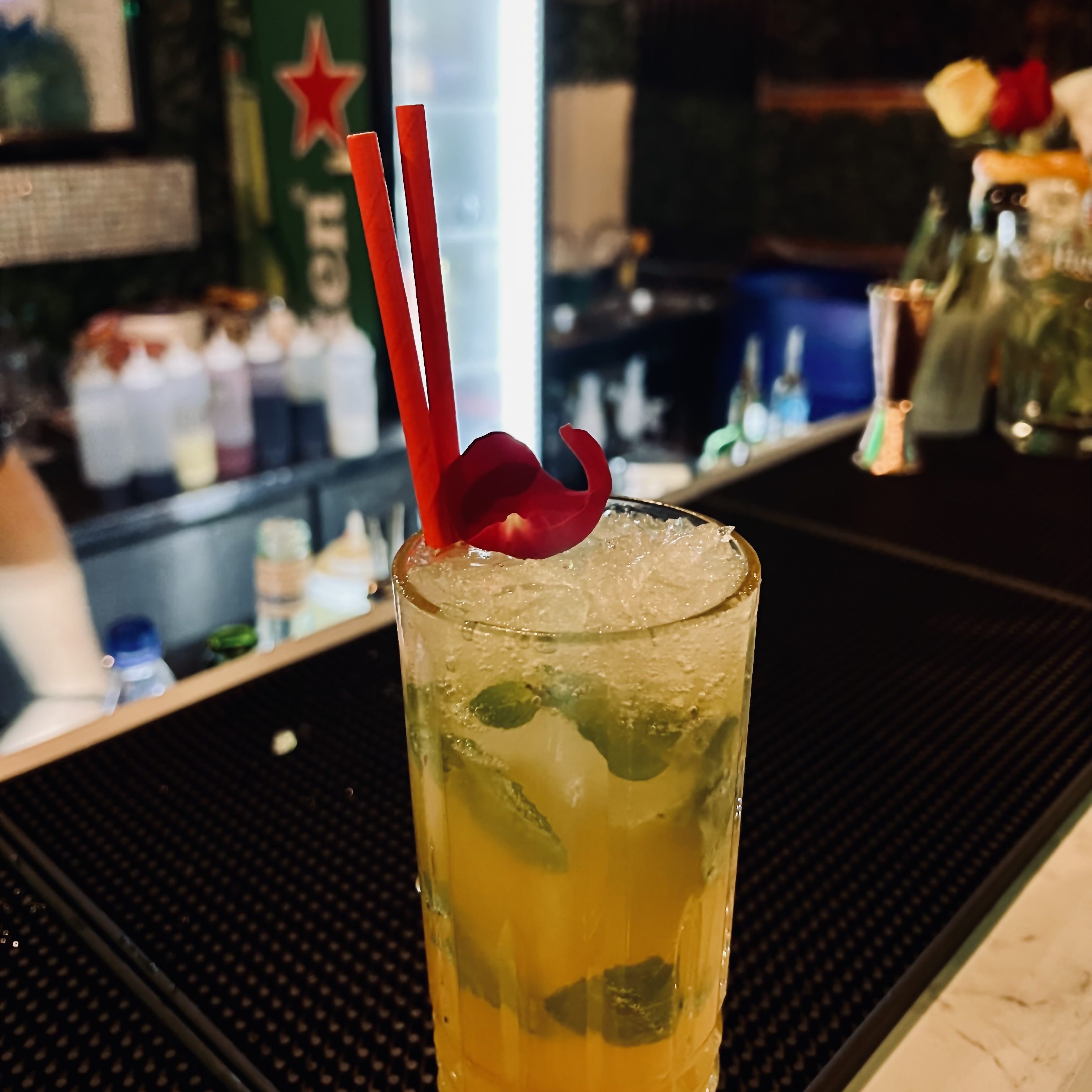
In this case, I didn’t fully immerse myself in the Chilean culture. Of course, I tried everything, but I preferred to order a mojito or sangria every now and then when I went out. Far less dangerous and also tastier.

My Conclusion (Mi Conclusión)
While writing this article, I realised that the Chilean cuisine is perhaps not quite as terrible as people say. Apart from a few very strange combinations, which aren’t always bad, there are also some really tasty dishes. You certainly won’t have to starve.
The local cuisine is and will always be a part of a country’s culture. Therefore, in my opinion, whether you are an omnivore, vegetarian or vegan, tasting some typical dishes should be part of every trip or holiday abroad.
So, now that we’ve finished the topic of food, I’ll tell you more about my studies in Chile in my next post before I take you on another spectacular trip to the north of Chile. But until then,
Bussi Baba!
 Bussi Baba
Hinterlasse einen Kommentar