
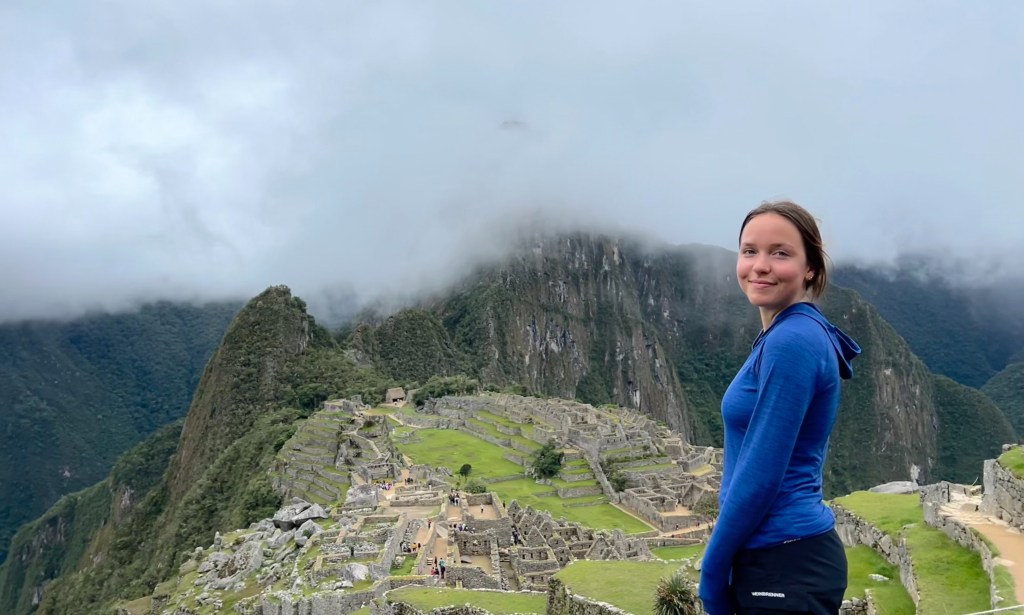
If I ask you for the first thing that pops into your head when you think of Peru, I am sure quite a lot of you will answer with Machu Picchu. When travelling to Peru, you can’t miss a trip to this world-famous ruin site. Obviously, this archaeological highlight was also high on my list of places that I absolutely had to see during my time in South America.
And yet this famous sight was only rediscovered in 1911. Of course, not in the state we know it today. Back then, it was more like a completely grown-over jungle. Today, more than a million tourists visit this fascinating place every year.
So what exactly makes this attraction so interesting and popular among tourists? And how do you even manage to arrive at this rather remote place in the mountains?
The Arrival
There is not just one way to reach Machu Picchu. Depending on how much time you have available and whether you are a keen hiker or prefer the less strenuous option, you can choose from a wide range of alternatives.
I will give you a brief overview here. However, the easiest way is to head to one of the many travel agencies as soon as you arrive in Cusco, ask for their advice and then book one of the tour packages. Only in high season is it advisable to book your entry in advance online.
Located at the foot of the mountain on which the ruins are situated is the small village of „Aguas Calientes„. This translates to “ hot waters“ and indeed you will find hot springs here where you can relax after your hike or tour. Whichever way you decide to get here, you will probably stay for one or two nights. Even though the village is quite cute, you really shouldn’t spend more time here. Due to the huge tourist crowds and the isolated location, the prices are extremely overpriced.
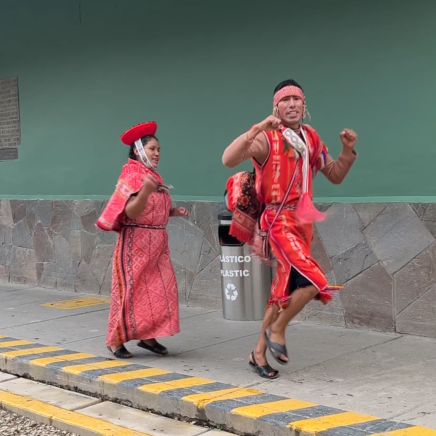
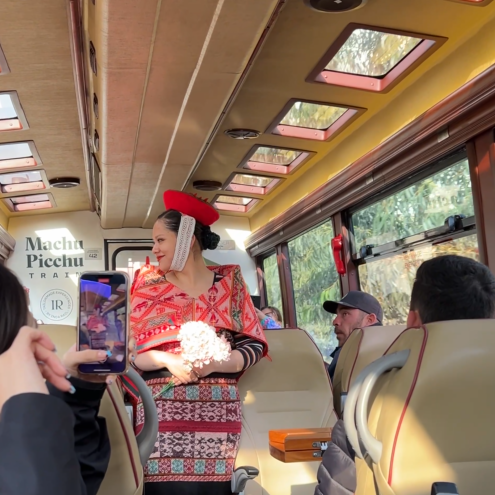
The quickest way for you to get to Aguas Calientes and then leave again as fast as possible is by train. First you have to take the bus or shuttle from Cusco to Ollantaytambo. From there, the „Inca Rail“ continues to Aguas Calientes. Many people hike the section from Ollantaytambo to Aguas Calientes along the railway tracks. However, the train journey is worth every cent. Not only do you have a 360-degree view of the beautiful landscape, but with help of a small two-man show in the train carriage, you also learn more about the history of the Incas. That’s an experience in itself.
Probably the most popular option, at least for all fans of the mountains, is the well-known Inca Trail. If you have a little more time, you can hike for four days along the route that was already travelled by the Incas many years ago. The trails are only accessible with a guide. So, no solo hikes here. The services included and the sleeping accommodation vary depending on the provider. In principle, however, you are accommodated in simple base camps and sleep either in a dormitory or tent. Most packages also include all meals from breakfast to dinner. Some even count with luggage transport. Unfortunately, you have to spend quite a lot of money on this type of tour.
If you don’t want to spend all your travel budget on a multi-day hike, but still want a similar experience, opt for the slightly cheaper alternative. The Salkantay Trek is a four to five-day trek. Compared to the Inca Trail, only the route changes. Other than that, you can also choose between different packages, depending on the services included.
As I am a motivated hiker, but simply didn’t want to loose too much time on a multi-day trek, I decided to go for the slimmed-down version of the Inca Trail. Machu Picchu Reservations offers, among other services, a 2-day Inca Trail where you only walk the final section of the entire trail to Machu Picchu. This was the best option for me, as I still wanted to have earned my arrival at the archaeological site. After all, it’s a different feeling when you hike up there than when you just hop on the train.
Besides, I also wanted to save some money. In the end, however, I realised that I would have paid about the same for the Salkantay Trek. You don’t even want to imagine how much you would have to invest in the entire Inca Trail.
2 Days Inca Trail to Machu Picchu
Like most tourists, our group, which consisted of five people in total, started our trip with a bus journey from Cusco to Ollantaytambo before sunrise. After about an hour and a half, you reach the town. We then waited there for the train.
The cool thing about the two-day Inca Trail is that you have a bit of everything. The Inca Rail takes you from Ollantaytambo to kilometre 104, which is about halfway to Aguas Calientes. We were in our hiking gear, the lack of sleep written all over our faces, and next to us were two Asian women who spent the whole journey fixing their make-up. There are also those who really only go to Machu Picchu for the photo.
Anyway, our group and a few other people jumped off the train at kilometre 140. Here we met our guide again, received our lunch and snack pack and started our hike.
Our group consisted of a couple from Taiwan, another couple from Spain and myself. Happily alone.
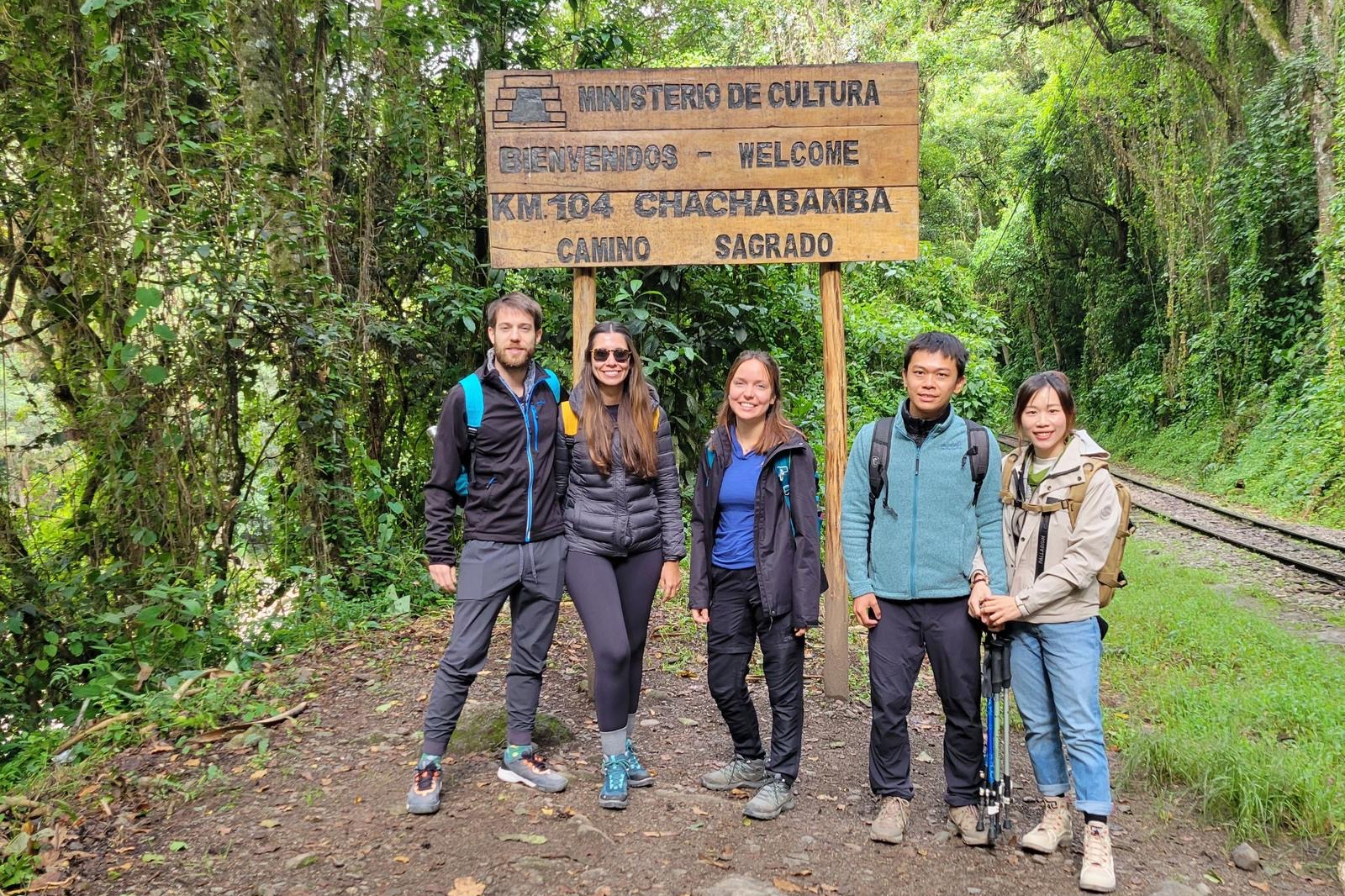
At the beginning of the hike, we were pushed really hard. Our guide said that he would set the pace for the first twenty minutes in order to determine our fitness level. Well, no one was as fit as him, who does this hike on a regular basis. He sprinted rather than hiked up the rather steep section. I was the only one who could keep up with him halfway. At least until I ran out of breath. After all, the altitude here took a lot of energy and breath. But then he let us determine the speed.
In between, we took some short breaks to catch our breath and have a snack, of course. We also passed some interesting places where we found more ruins and our guide told us stories and fascinating facts.
The Incas
I’m not a history expert and I can’t remember all details of the stories told on our tour. Nevertheless, I would like to share a few interesting facts that particularly fascinated me. For the first time, I appreciate the fact that we spent months on ancient civilisations in high school, so that in the end there was hardly any time left for the Second World War.
The Incas are not only one of the most famous indigenous civilisations of South America, but also the largest pre-Columbian empire that ever existed, surpassing the Maya, Aztecs, Olmecs, etc. Its territory extended across Colombia, Ecuador, Bolivia and Peru all the way down to Chile and Argentina. Basically, along the entire Andean Mountain range. Through the sophisticated way in which they conquered new land and other tribes, they were able to secure a huge territory for themselves.
And indeed, the Incas were a very highly developed civilisation. This is also reflected in their architecture and agriculture. Even those who belonged to the lowest social class are said to have always had enough to eat. Religion also played a very important role. Sacrifices of animals or even humans were made to the most important god, Inti, the sun god. It was a great honour for families if their children were chosen as sacrificial offerings.
There was another fact that I found very interesting that our guide shared with us. The Incas also had their own calendar system. According to this, every hundred years a major event would take place that would have a global impact in order to restore natural balance. If we go back in time a couple of years, we will see that we can definitely recognise a pattern. Only recently, we faced a major challenge with the Covid-19 pandemic. Many people lost their lives. About a hundred years earlier, the world was struggling with the Spanish flu and if we go back another hundred years, cholera was a global threat. And the Incas apparently already knew about it.
Originally, however, it wasn’t the population itself that was called „Inca“, but only the emperor. Now we use the word for all the people living in the empire. Today, it is estimated that there are still 13 million Inca descendants.
Stopover at Wiñaywayna
Wiñaywayna was the first archaeological site we passed during our hike. Here we found a small Inca village. We learnt more about the agricultural aspects in particular there.
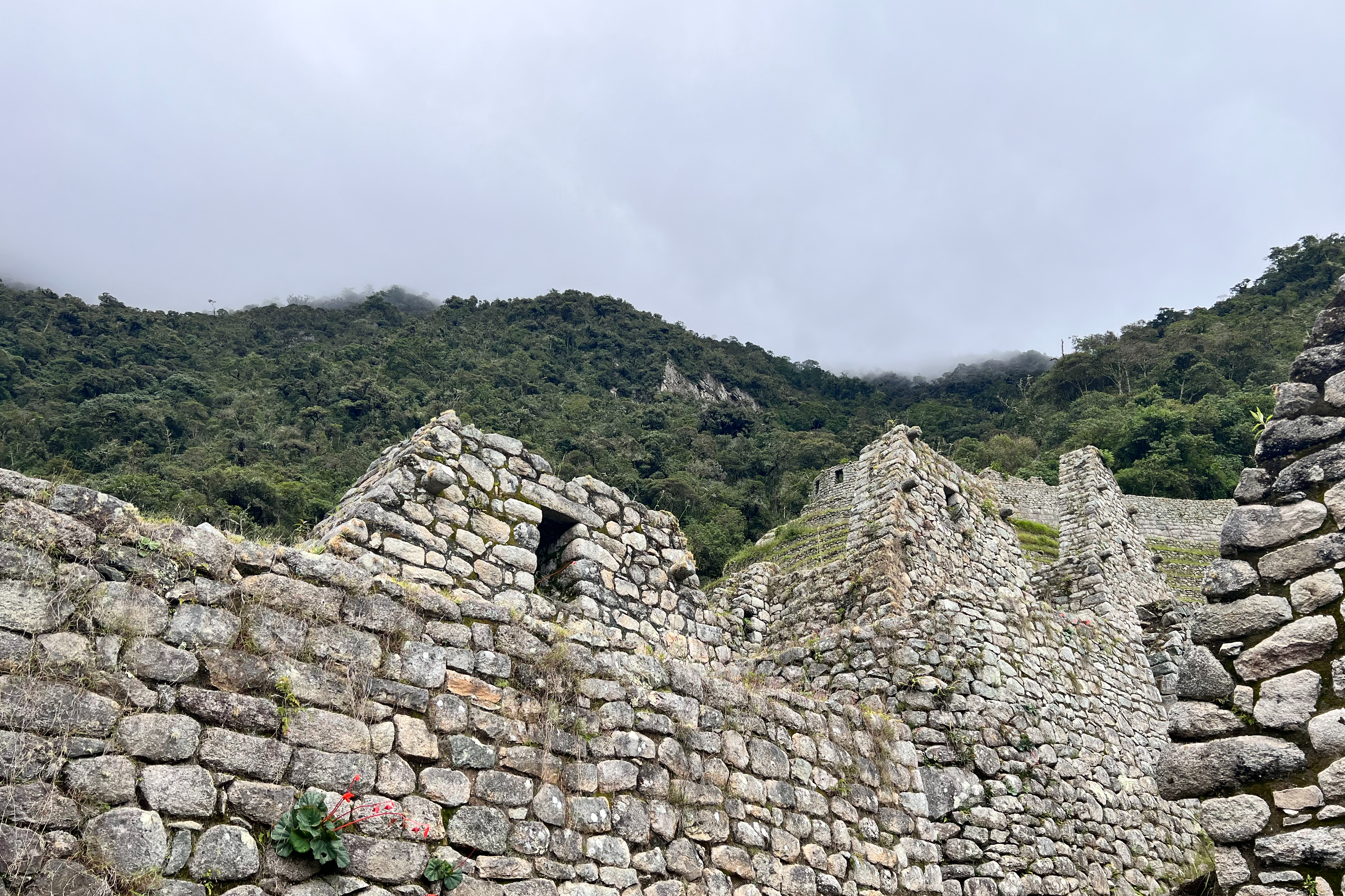
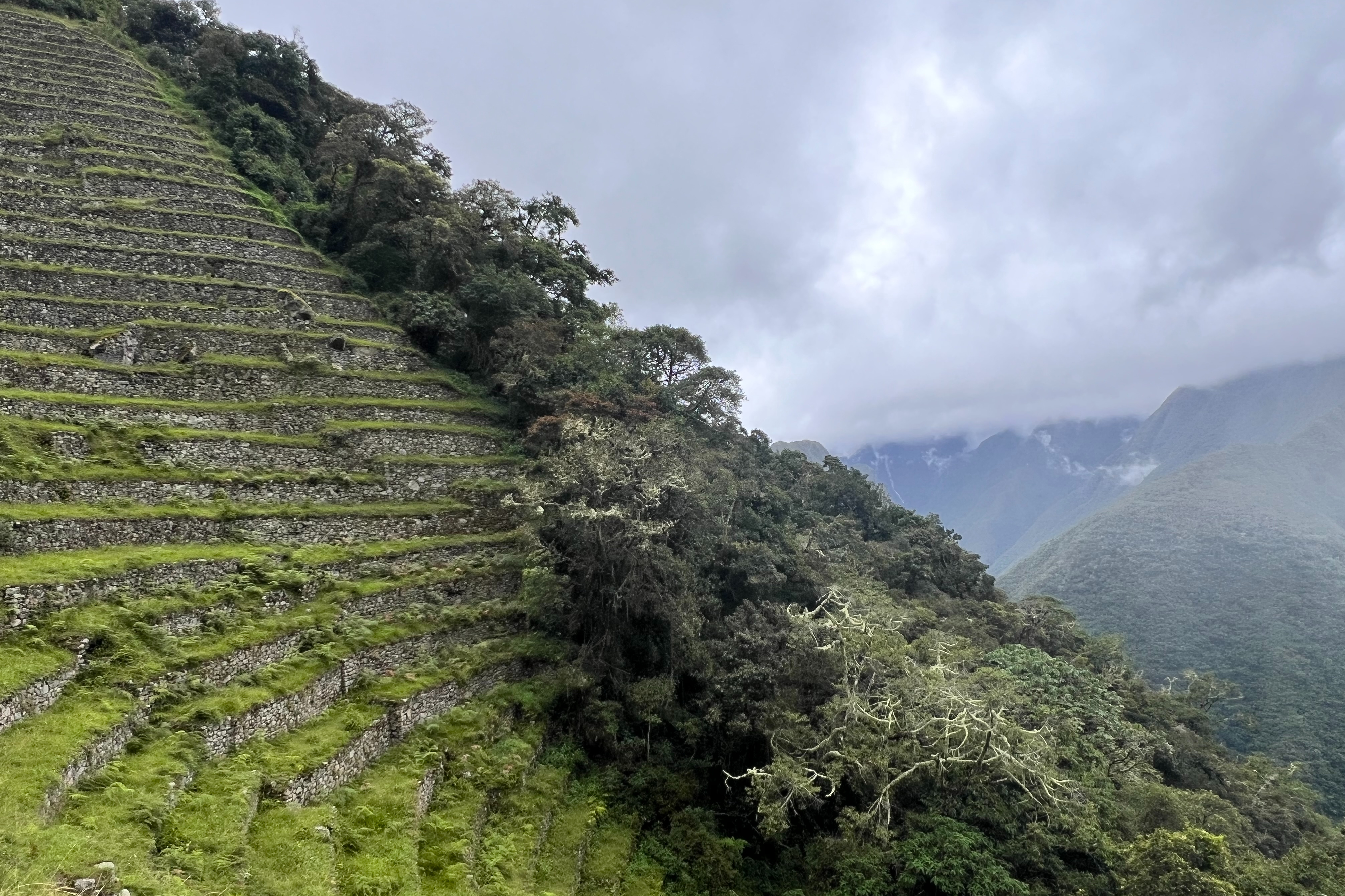
You have probably already seen the typical terraces that the Incas used in the Andean region to grow fruit and vegetables. The steep slopes of the mountains would otherwise hardly have been suitable for cultivation. The terraces also developed their own microclimates so that different types of food could be cultivated. The main food crops included corn, quinoa and, of course, potatoes. Two thousand of the world’s four thousand potato varieties can be found in Peru, the supposed country of origin of the internationally popular nightshade plant. And the Incas actually ate a predominantly vegetarian diet. Meat was only served on special occasions.

By the way, these agricultural terraces were called „Andenes“. This is probably where the name of the longest mountain range in the world comes from.
Off to the Sun Gate
Then, our hike continued. The first three hours are actually the hardest, as most of the route is uphill. From Wiñaywayna, it’s another two hours or so to the Sun Gate and thus the door to Machu Picchu. However, this stretch is quite flat and easy to master.
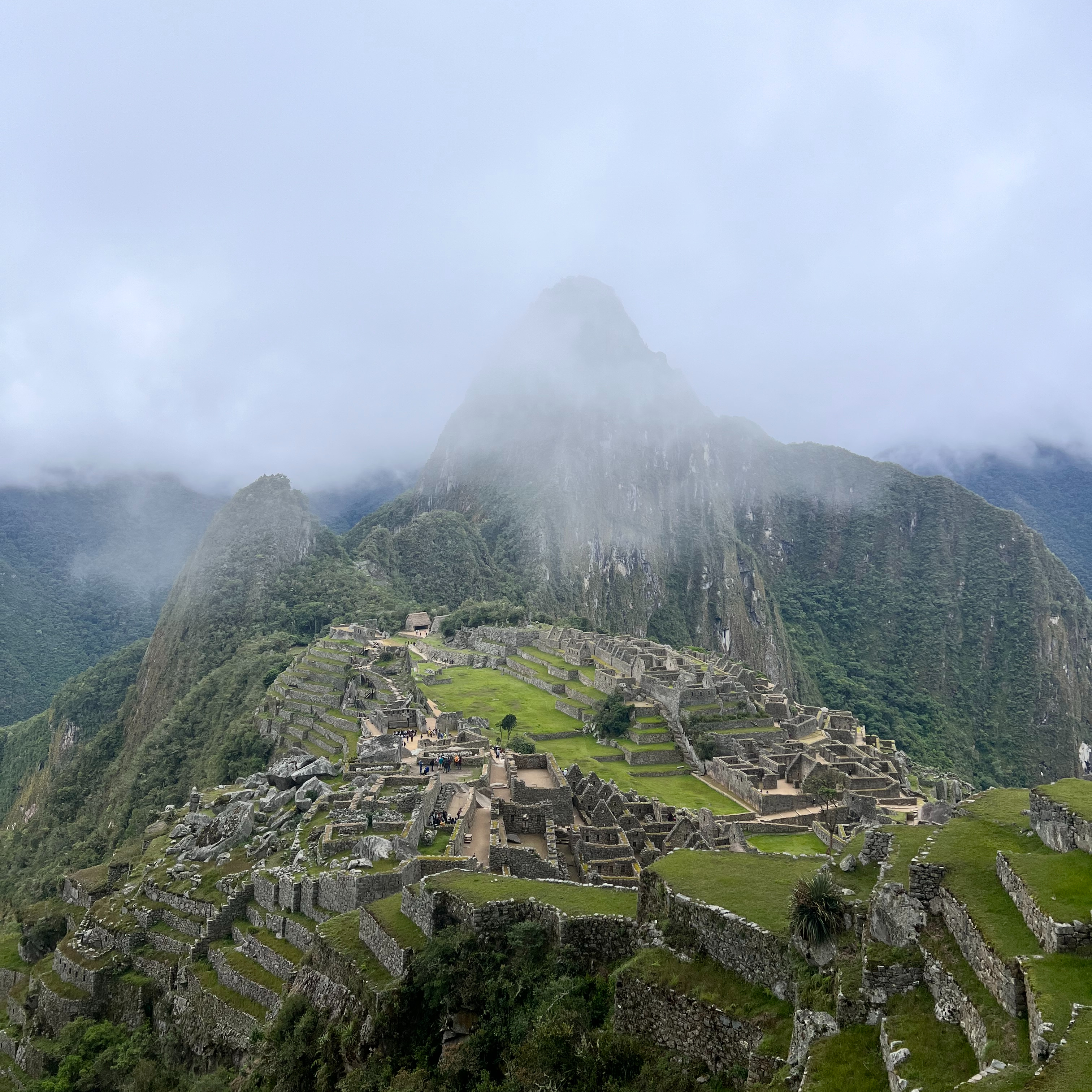
So, in the afternoon we arrived at the Sun Gate and our first view of Machu Picchu was … not as expected. To be more precise, we couldn’t actually see anything.
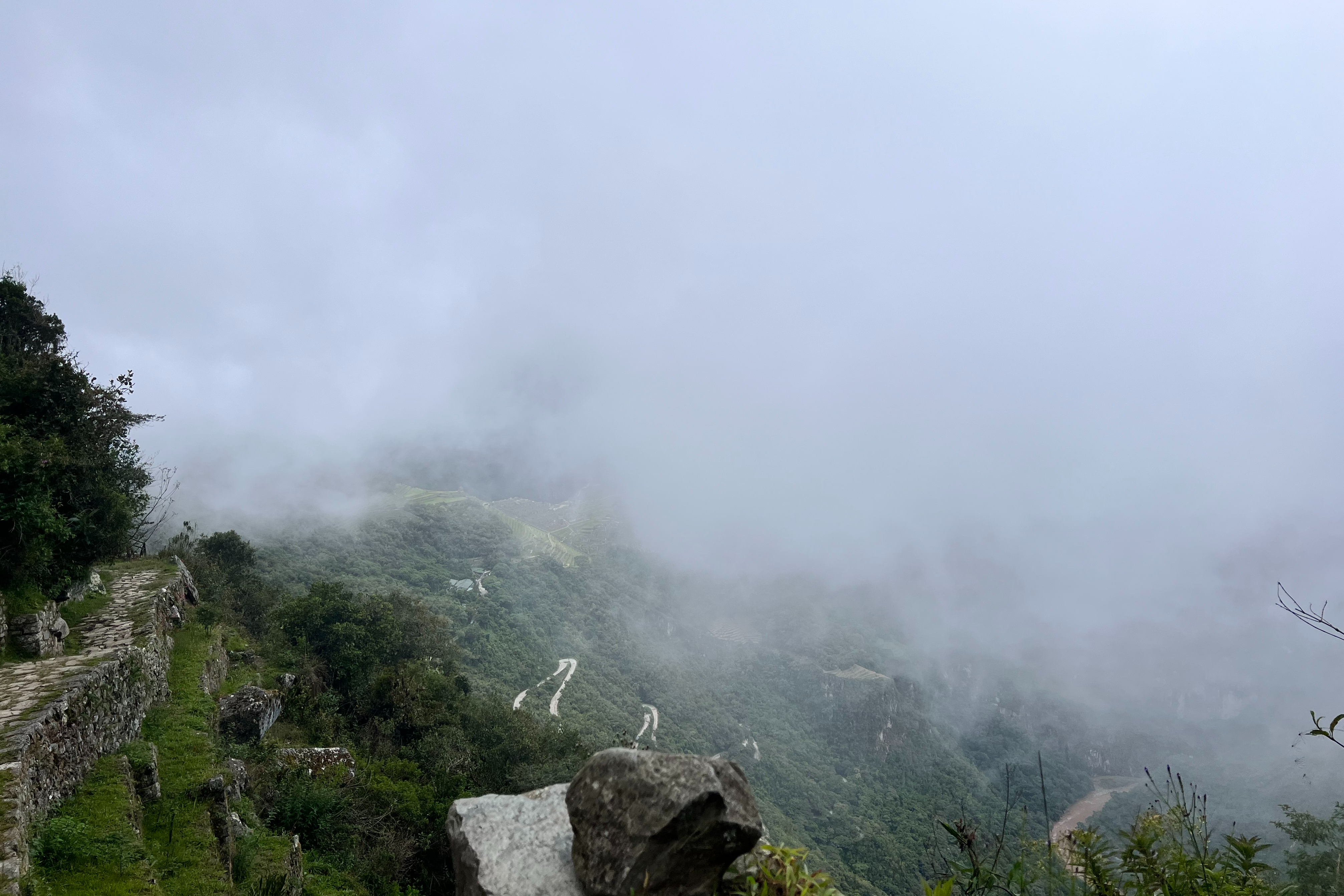
But don’t worry. Our guide immediately assured us that every group he had taken to Machu Picchu to date, had been able to see the attraction as we know it from pictures. So, we waited patiently and after about ten minutes, the view cleared up a little and we were able to catch our first glimpse of the historic wonder.
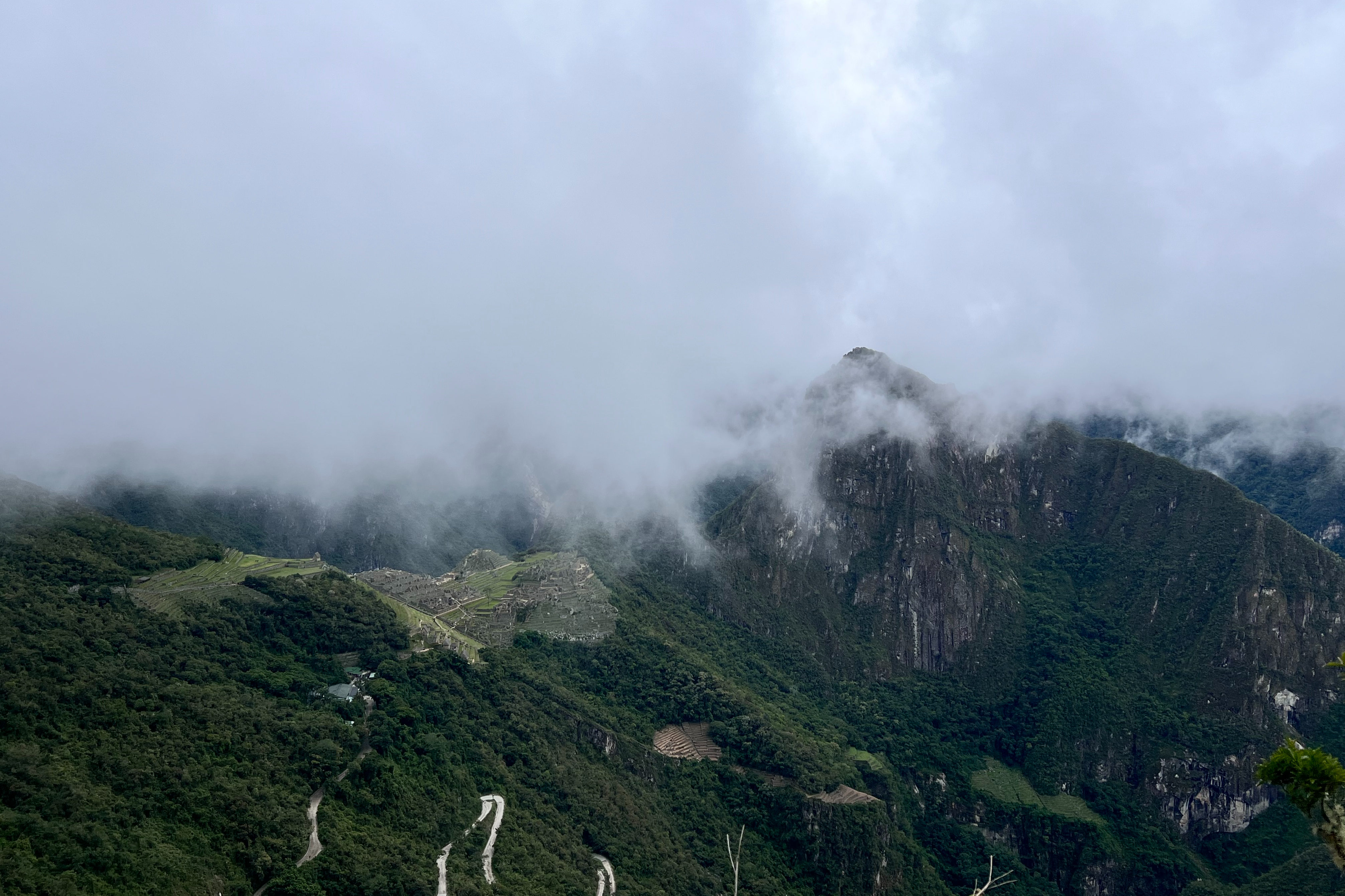
After another short walk, we were standing right in front of it. An incomparable, unforgettable feeling. Although the actual guided tour of the site wouldn’t take place until tomorrow, we were still able to explore the upper part and, of course, take some cool photos.


The End of Day 1
We then took the bus down the mountain road to Aguas Calientes, where we stayed in a small hotel for the night. On this journey, our guide apparently realised that I was easy to tease. He was actually quite a nice guy, and good-looking too. At first we both joked around a bit and at some point he got stuck with my name. He really did ask me whether my mum had had a difficult birth or why she had named me like that. I already knew that my first name was very atypical in South America. But no one had ever insulted it. And that was just the beginning. He wouldn’t let go of me for the rest of the journey and kept finding new things to test my nerves. Until at some point I consciously tried to keep my distance.
Once we arrived in Aguas Calientes, after a much-needed shower and a short break to relax, we all had dinner together, which was also included in the package. Appetiser and fish for the main course. Very traditional. Unfortunately, I had to disappoint my guide, who wanted to go to a karaoke bar afterwards. After all, I (and my nerves) needed some rest and sleep after this exhausting day so that I would be fit again for the next.
The next day started very early again. After a generous breakfast from the buffet, we took the bus back up to the archaeological site. You can also hike up the mountain. This involves about 1,700 steps. However, you should try to get to the top as early as possible to avoid tourist crowds. In any case, I preferred to save my energy for later.


Machu Picchu
The site is the subject of numerous theories and myths that have yet to be clarified. Fact is that the site is a perfect example of the architectural and agricultural advances of the Incas. The city was probably built in the 15th century. And yet it is still so well preserved. Even the water pipes from back then are still intact.
I also have to admit that the location, with the beautiful mountains in the background, makes the site the perfect photo spot. The misty clouds can be annoying when they block your view. On the other hand, they give the place an additional mystical atmosphere.

A little over a hundred years ago, the American archaeologist Hiram Bingham was actually looking for a completely different site. Nearby, however, he is said to have come across a young boy who simply said „Machu Picchu! Machu Picchu!“, pointing at the mountain. The great discovery was then made and the place was named Machu Picchu, which actually means nothing more than „old peak“.
Only theories exist regarding the construction of the city. The complex is said to have originally comprised more than two hundred buildings. All made of stone. Some of the rocks are so huge that it is difficult to explain how they were transported up the mountain.
Furthermore, no mortar was used in the construction of the houses. The stones were cut so perfectly that they simply had to be stacked on top of each other. And this is how they have survived numerous earthquakes, winds and weather. If you take a closer look at the walls, you can see how evenly they were built. The roofs were mostly made of straw or reed. That is why they no longer exist today. Roofs have only been reconstructed for a few buildings as representation.
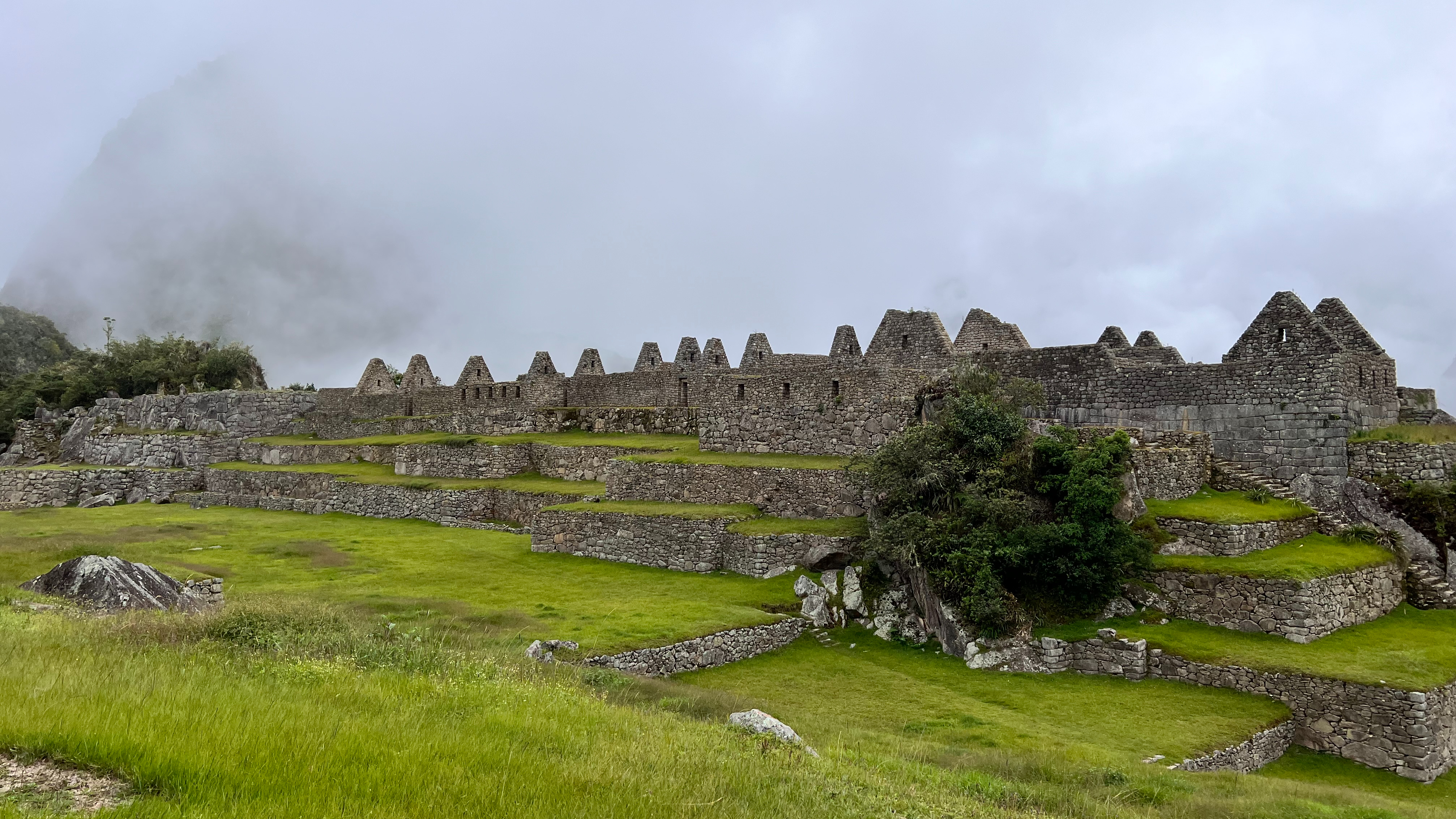
The religion is also reflected in the buildings. For example, there are always either two or three windows on a room’s wall. These represent duality, such as life and death, or trinity, such as heaven, earth and the underworld.
The site also comprises numerous temples built in honour of the gods. For example, the temples of the puma, the condor and the snake, with the condor representing the sky, the puma the earth and the snake the underworld.
Whether Machu Picchu was built as a religious centre or as a fortress to protect against attackers is yet unknown, and there is no explanation for many other unanswered questions.
Machu Picchu Mountain
The famous peak that most people know from the classic photographs is the mountain called Huayna Picchu (young mountain), which rises 2,700 metres into the air in the middle of the terrain. You can climb both this and Machu Picchu Mountain for a small extra fee.
Machu Picchu Mountain is slightly higher at 3,140 meters. You have to climb a total of 1,600 steps to get to the top. I opted for this one. Not an easy hike. But luckily, I got some company. Just in front of me, a girl from Austria had signed the list at the entrance. Not even a week on the road and already meeting someone from home. Anyway, from then on, we conquered the mountain together. At some point, my friendly guide came running after me. He just really refused to leave me alone.

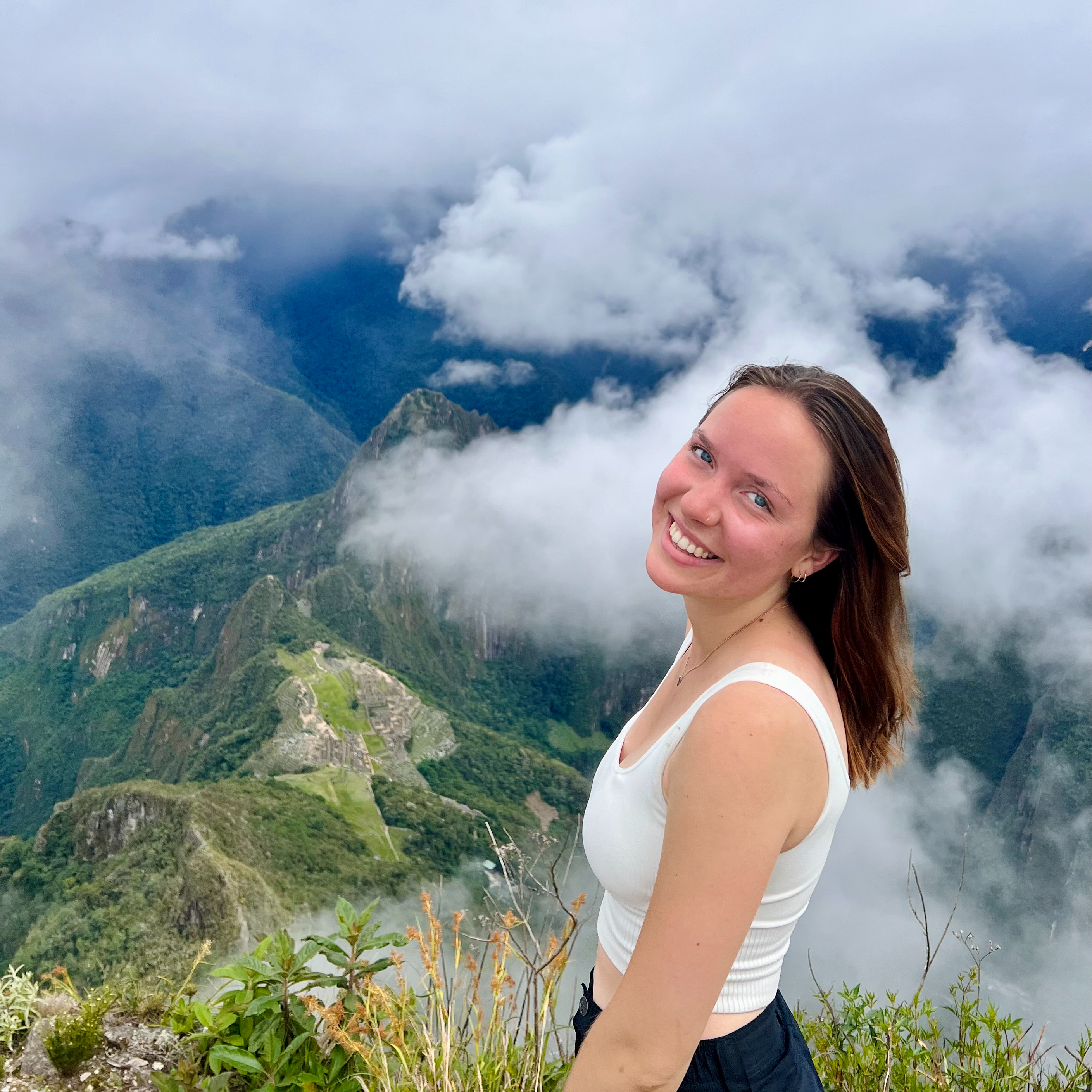

Once we arrived at the bottom, we were given another private tour of the site, which was pretty cool actually.

We then headed back to Aguas Calientes. Fortunately, we didn’t have to walk back to kilometre 140, but were able to get straight on the train to Ollantaytambo. The shuttle then took us to Cusco. There I got myself a well-earned dinner. This time a menu for only EUR 1.60 (read my article on Cusco).
My Conclusion
No matter how you do it, whether you opt for a trek or choose the quick option by train, Machu Picchu will undoubtedly fascinate you. That’s why this activity should definitely not be missed during your trip to Peru. Although this attraction is no longer a hidden gem, it is still a definite must-see.
Not only is the place beautiful, it is also extremely impressive. With every step you take along the paths once travelled by the Incas, your interest in the stories that this site conceals grows. I’ve never been a big history fan myself. But when you’re in a place like this, you just want to know: How?
And why? And the fact that there are still no answers to so many questions makes you even more curious.
I can definitely recommend my 2-day tour with Machu Picchu Reservations. Although my guide was a bit annoying at times, he did a great job and gave us a very good overview of the entire history of the Incas as well as the architecture and significance of the site itself. And while I am talking about my experience, I would love to go back there again myself.
But Machu Picchu wasn’t the only fascinating place I would discover during my stay in Cusco. I can already tell you one thing: My next blog post will be colourful. Until then,
Bussi Baba!
 Bussi Baba
Hinterlasse einen Kommentar