
Even before leaving Austria, it was clear to me that I had to go to Peru. While I hardly knew anything about Chile, Peru had long been on my bucket list. After graduating from high school, I started making plans to explore this beautiful country. However, some circumstances came in between and the trip never took place. Until now. What remained was my fascination for a country I had never been to before.
When I had to choose which university to go to for my exchange semester, the political situation in Peru wasn’t very stable. That’s why I chose Chile, the most developed country in South America. In the end, however, I was quite happy that I was studying in the cute city of Viña and not in a metropolis like Lima, as my campus has a partner university there.
Now was my big moment. I would finally have the chance to travel to Peru. And what better place to start than Cusco.
But like almost every trip, this one also started with an adventurous arrival.
The Arrival
Before leaving, I had to say goodbye first. Although I would be returning to Chile after my trip, as my large suitcase was staying with my host family, it wasn’t easy to say „Adiós“. Especially because I knew that by then there would no longer be many of the other exchange students around. So it was the end of four very exciting months. Nevertheless, the excitement of what was to come was huge.
Luckily, at least I wasn’t completely alone when I left the country. My two Peruvian fellow students happened to be flying back to their home country on the same day as me. Almost at the same time, just on a different plane to Lima and not Cusco. While we waited for about an hour at passport control, I got some tips and recommendations for Peru from two Peruvians. There could hardly be any better source of information.
After luggage control, our ways parted. Now I was completely on my own. As I would be for the next few weeks. It was a bit of a strange feeling.
The airline LATAM took me directly from Santiago de Chile to Cusco. There aren’t many direct flights though. Normally you have to fly via Lima, as Cusco doesn’t actually have an international airport. But I was lucky.
At the airport in Cusco, I had to face my first challenge. Sometimes preparation is everything. Then I wouldn’t have been stranded at a small regional airport in Peru without money and internet.
Actually, I got the Peruvian SIM card from a friend, but I couldn’t find it anywhere at that time. Actually, there is wifi at pretty much all airports, but not here. Actually, you can either change money or withdraw money at any airport. But again: Nothing.
So, I couldn’t order an Uber, which was the initial plan, nor could I take a taxi as I didn’t have any cash.
Fortunately, the airport in Cusco is in the centre of some remote part of the city. On Sunday afternoon, the streets looked pretty deserted. Nevertheless, I went in search of an ATM. Unfortunately, the range of cash machines there was just as large as at the airport itself.
So, I went to find a SIM card somewhere, in a shop where I could pay by card of course. But as this attempt was also unsuccessful, I ended up asking in one of the mini stores to see if they had wifi and quickly ordered an Uber. That really did work out and I arrived safely at my accommodation in the end.
The Accomodation
I stayed at „The Sleepy Mouse“. The hostel is very centrally located in a cute little side street. You can reach the city centre quickly on foot. The cool thing was that I had the six-bed dorm room all to myself for two nights. It was really nice to have some time to myself, especially at the beginning of my trip. The owner was also extremely welcoming. When I left, she even gave me a hug and wished me a safe travels. You can also book some tours at the hostel. However, you can find numerous providers scattered all over the city. Apart from that, I can only say that the beds were comfortable, everything was clean and you can cook your own food or free tea in a small shared kitchen (A little advice: drink lots of coca tea to prevent altitude sickness).
My First Night
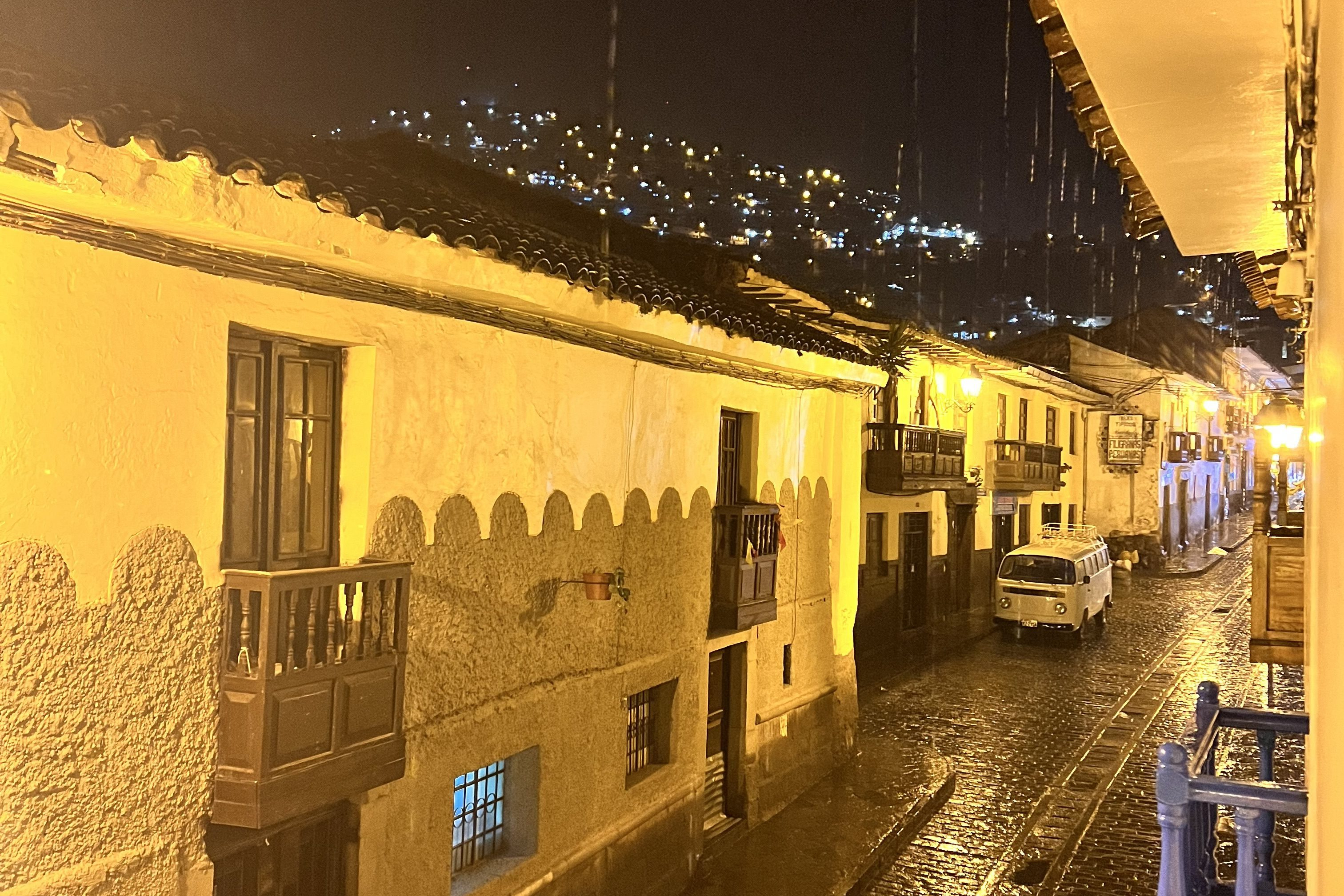
The rainy season in Peru reaches its peak in February. During this period, it is therefore not possible to visit Machu Picchu. I had arrived in Peru at the beginning of December and knew that I had to expect rain. Unfortunately, I was not quite as prepared as I thought when I went for a short walk around the city on my first evening, primarily to get money and a SIM card. On the way back to my accommodation, it started to rain. Rarely have I experienced rain like this, not even in Austria. Of course, I had left my rain jacket at the hostel. But I think I would have been completely soaked within a minute anyway.
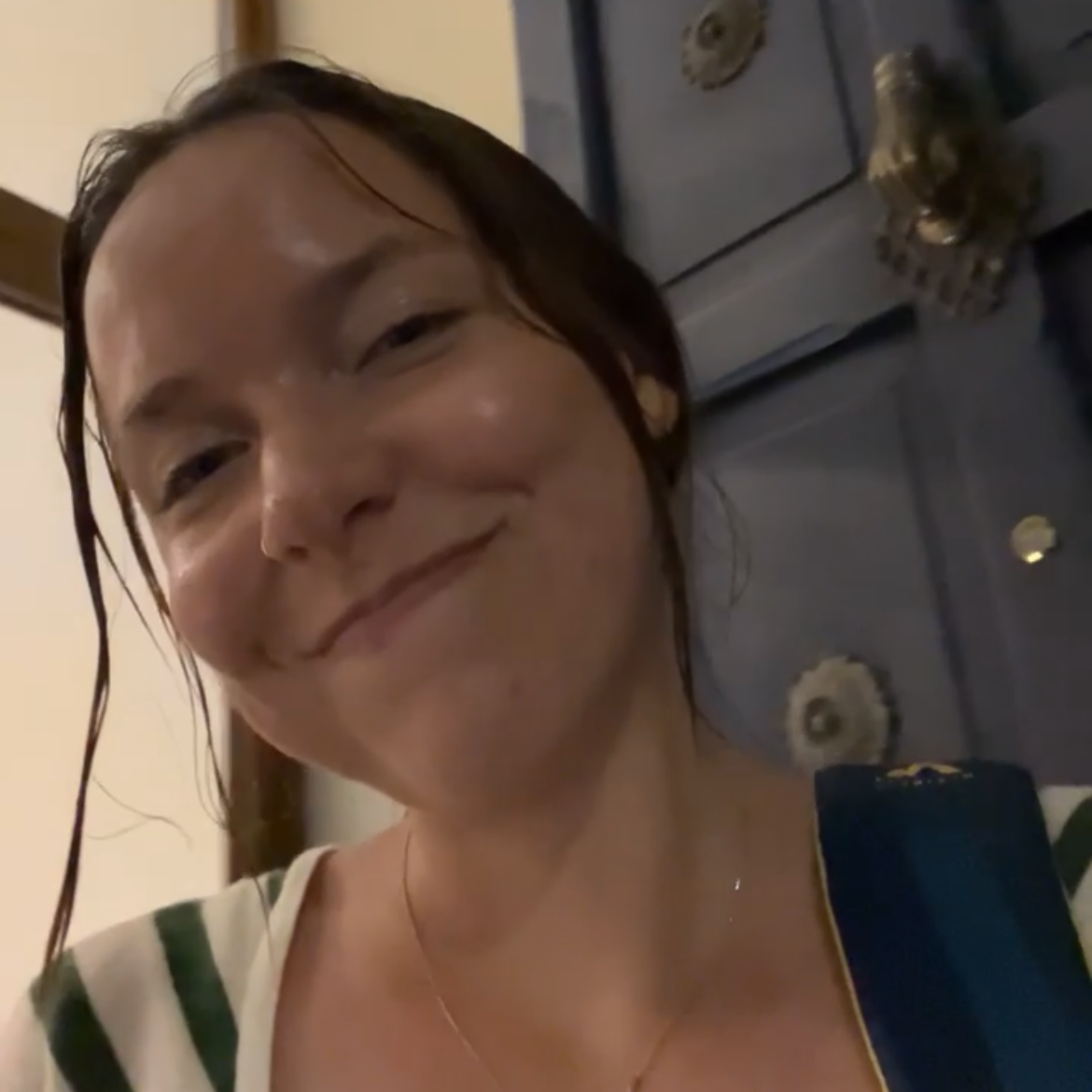
But I was so emotionally charged because I had finally arrived in Peru that after my turbulent arrival, not even this rain could put me in a bad mood. At least I did not need a shower anymore 😉
Regarding SIM cards: In general, I bought a prepaid card in all countries where I was travelling for a longer period of time. If I was in a new country for just a few nights, such as in Bolivia and Ecuador, I simply made use of the Wi-Fi in the accommodation or restaurants and otherwise managed quite well without internet.
Exploring Cusco
I actually didn’t have more than one full day in the city itself. I would spend the rest of the time on trips and excursions to the surrounding area. After all, there is so much to discover around Cusco. However, I would have loved to spend a bit more time in the city itself too.
Good To Know
If you are investigating hikes to Machu Picchu, you will often read that you should spend a few days in Cusco beforehand. For example, if you want to hike along the Inca Trail, you will pass points that are over 4,000 metres above sea level. What many people don’t know is that Cusco itself is already at an altitude of 3,400 metres. It is therefore recommended that you acclimatise in the city for a few days before embarking on challenging hikes at such altitudes. But even while exploring the city you will realise that you can quickly run out of breath. If you know that you have problems with altitude sickness, it is advisable to start your trip through Peru in Arequipa (approx. 2,300 metres) and work your way up slowly.
Cusco used to be the capital of the empire when the Incas still ruled the area and was considered the political, military and cultural centre. After the Spanish conquest, it remained an important centre for trade and religion. However, many parts of the city were destroyed in order to build new colonial-style buildings as well as numerous churches and cathedrals. This mixture of colonial and Inca architecture is probably what makes the city, which is now a UNESCO World Heritage Site, so popular among tourists from all over the world.
The Sights
But what are the highlights of this breathtakingly beautiful and historically important city?
I started my day with breakfast. After all, Peru is not only known for its history and landscape, but also for its excellent cuisine. At the Mercado Central de San Pedro, you can find everything you need to survive. Starting with a large selection of fruit and veggies, other foodstuffs such as cocoa and coffee, household products, through to a wide variety of souvenirs and freshly prepared dishes. Breakfast, lunch or smoothies and juices are offered in different sections. I got myself a pan con huevo, which is bread with scrambled eggs, and a hot chocolate, which consisted of water, cocoa, oatmeal and sugar. Simple but delicious and, above all, super cheap.
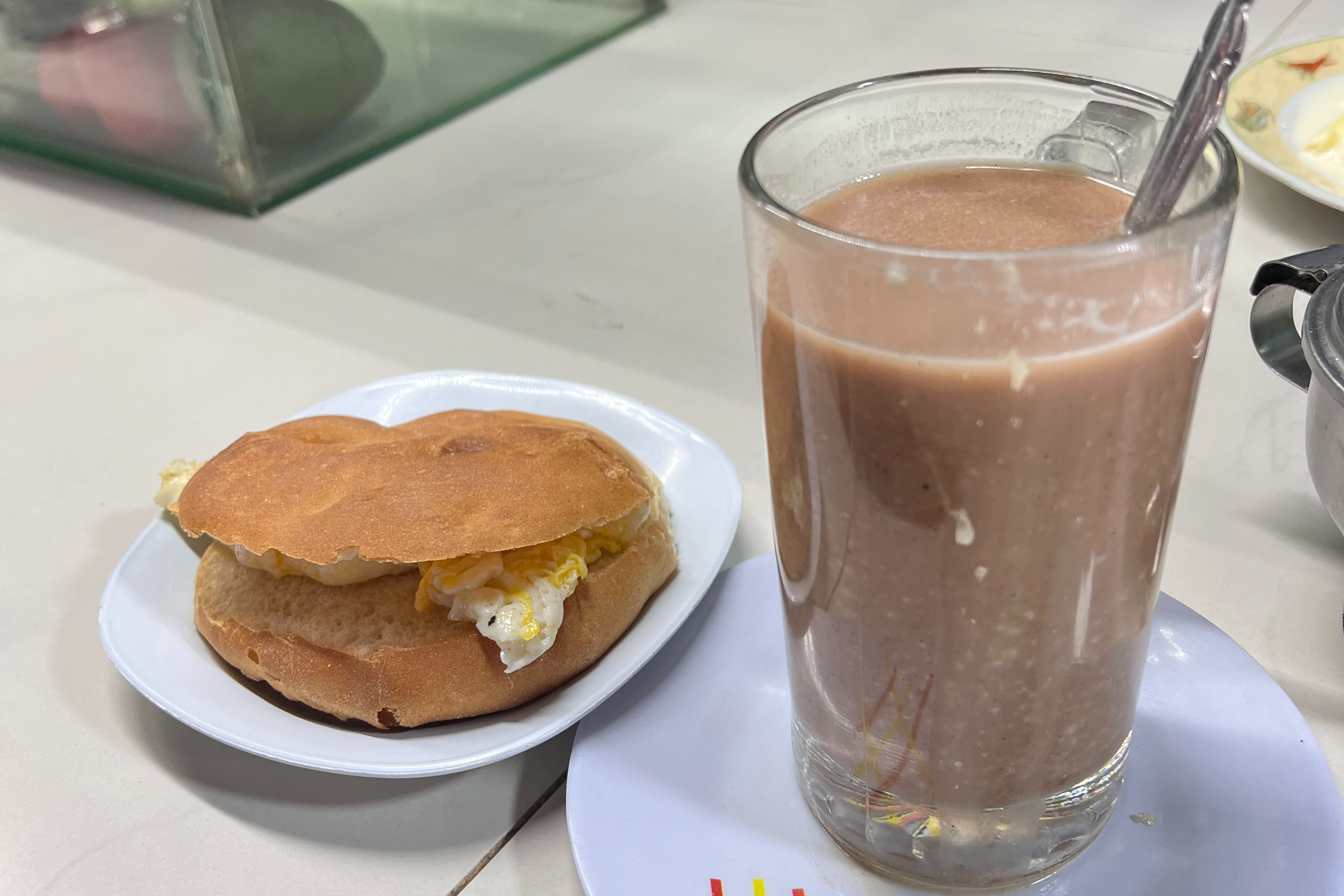
The currency in Peru are Soles. Four soles are approximately equivalent to one euro or dollar. For example, for one sol (25 cents) you can already get a pan con aguagate, i.e. bread with avocado.
I continued along Calle Santa Clara and through the Arco de Santa Clara, a beautiful arcade, towards the Plaza de Armas.

Plaza de Armas is a good starting point for exploring the city. In every Peruvian city you will find a „Plaza de Armas“, a centrally located main square. It is usually home to the cathedral, churches, government buildings and other historical buildings. The most famous building in the Plaza de Armas in Cusco is probably the imposing Cusco Cathedral, which you can visit without paying an entrance fee. Only during masses tourists are not allowed. Unless, of course, you want to participate in the mass.
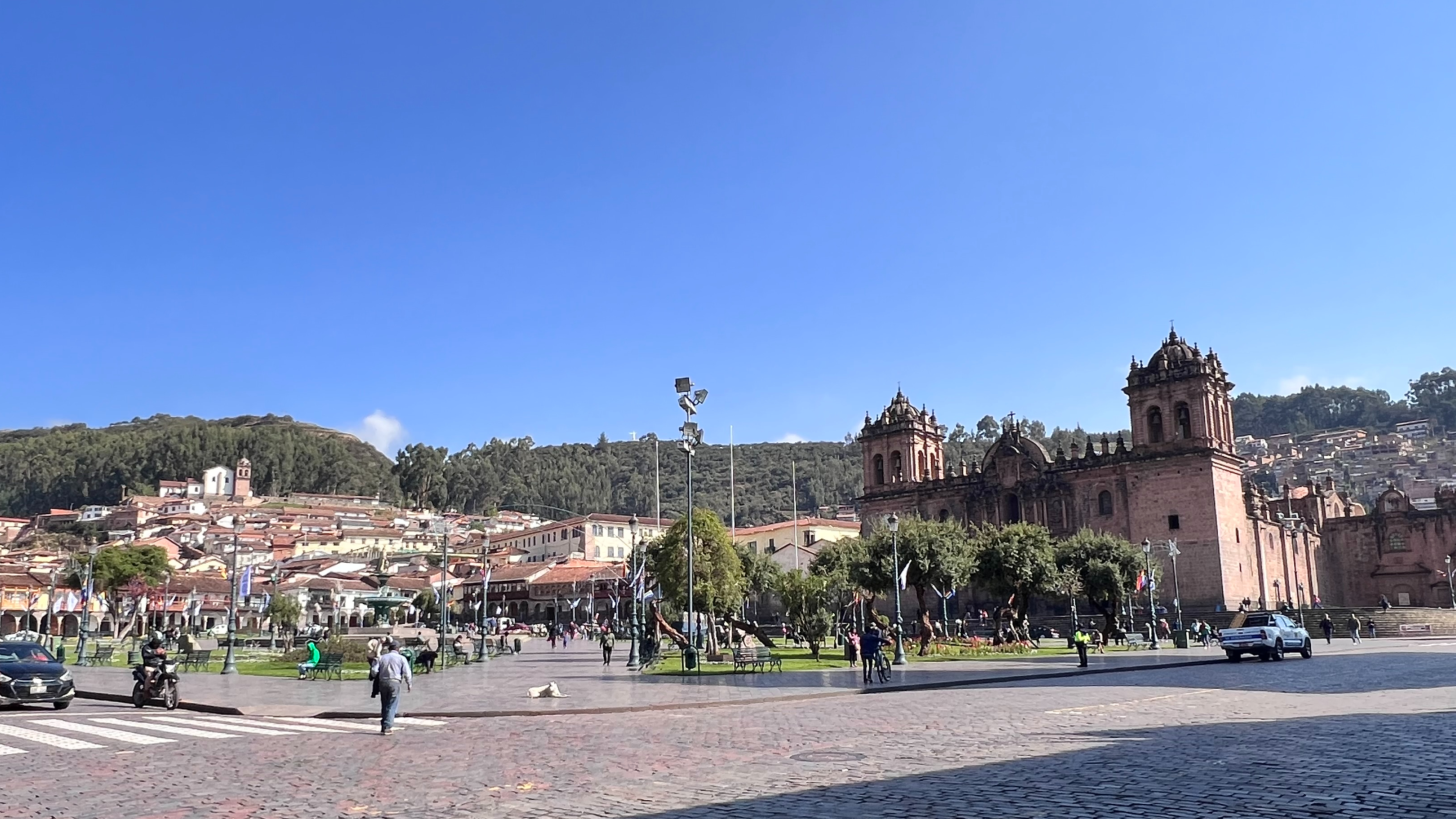
The majority of the population of South America is Catholic. The religion spread rapidly during colonisation. Nevertheless, many people still believe in Mother Nature (Pachamama) and nature spirits, leading to a fusion of the two beliefs.
To the right of the main altar of Cusco Cathedral, you need to look out for a particular painting. The version of the Last Supper that you will find here is different from the classic depictions in one small detail. In the centre of the set table you will find a cuy, a grilled guinea pig, a typical delicacy in Peru. You will find a total of four of this version of the Last Supper in Peru. One of them in the church „Templo La Compañía de Jesús“ in Arequipa. The guinea pig had an important religious significance in Inca times and was often offered as a sacrifice to obtain wealth, fertility and protection.
However, Plaza de Armas is just one of many squares in the city that invite visitors to linger. The Plaza Regocijo is located right next to the main square. Here you will find some of the famous arcaded cafés where you can enjoy breakfast or afternoon coffee. In general, however, prices in restaurants and cafés in tourist squares or near attractions are always higher and can quickly take on European dimensions.
From Plaza Regocijo, you can continue along Avenida El Sol. This is basically the main street of Cusco, where you will find numerous shops and tourist offices. You can also withdraw money, change money and buy SIM cards here. I would have needed this street on my arrival.
If you prefer it a little quieter, take the neighbouring Calle Loreto. This narrow street is home to several souvenir shops where you can buy colourful fabrics and clothes.

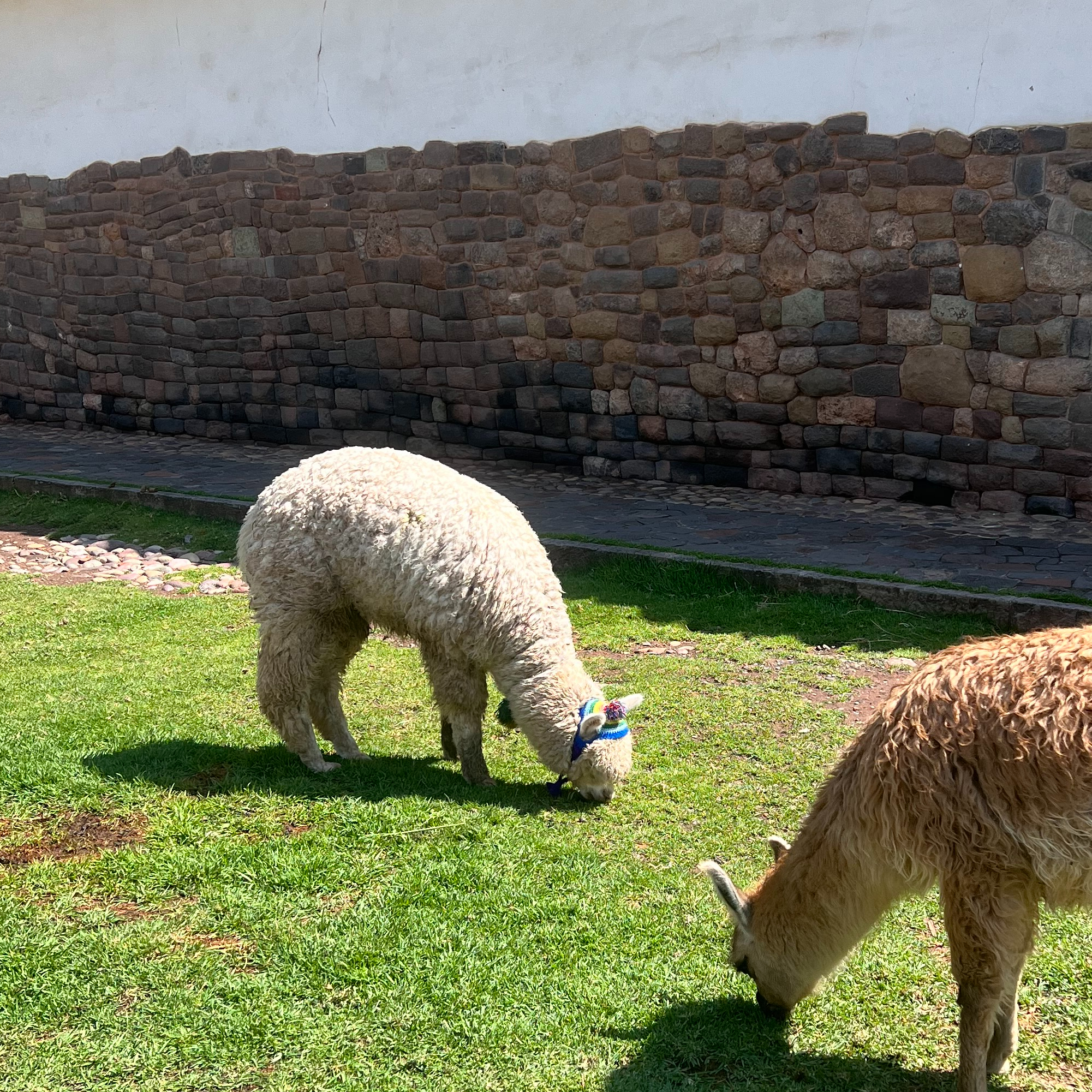
In any case, both roads lead to the Convento (monastery) de Santo Domingo de Guzmán and the famous Coricancha. The Coricancha was the most important temple during the Inca empire and translates as „Golden Temple“. It was built in honour of the sun god Inti. However, after the Spanish entered Cusco, parts of the building were destroyed and the monastery of Santo Domingo was built instead. The walls covered in gold were removed.
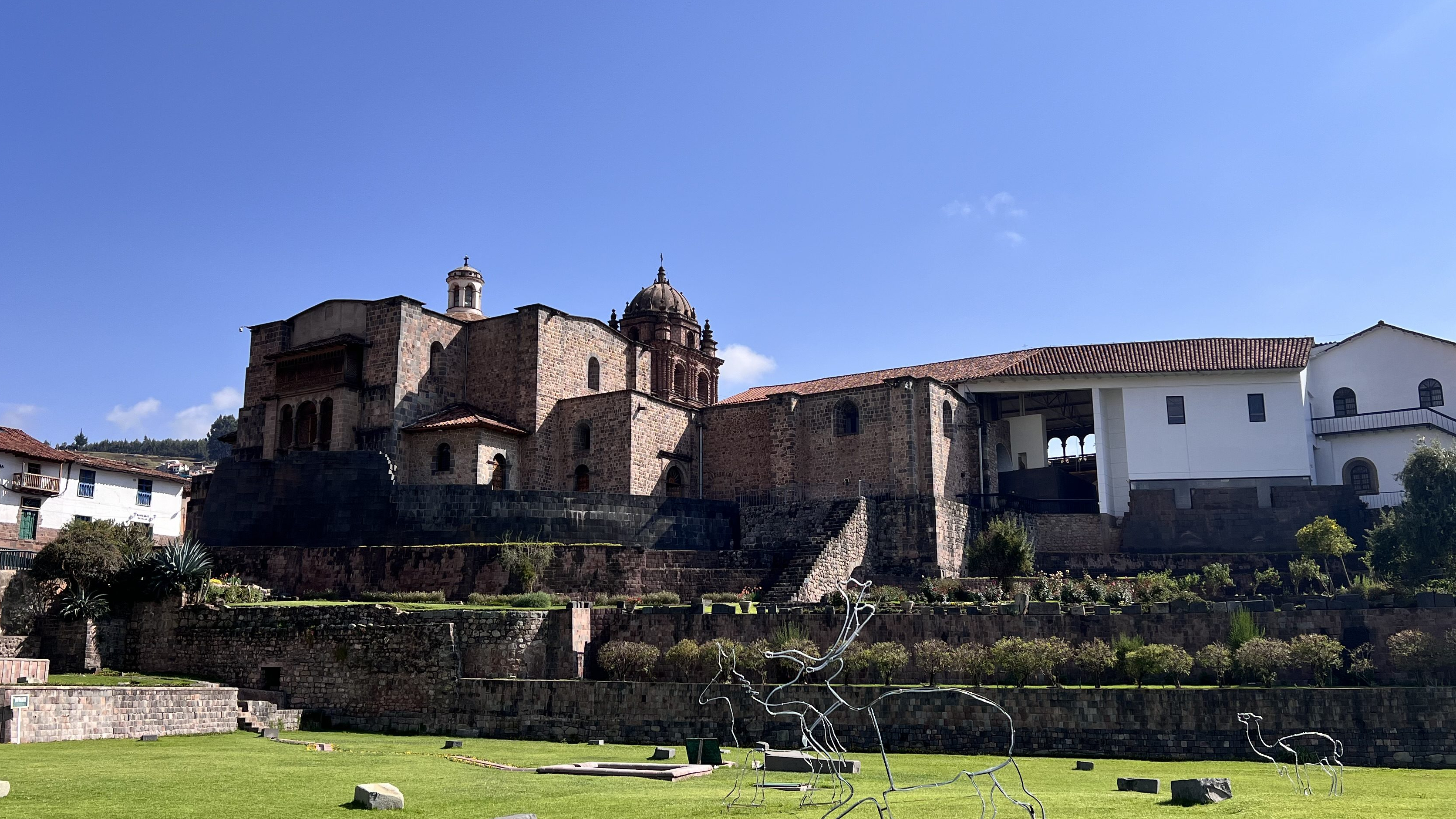
Today, the monument is a perfect example of the blending of colonial and Inca architecture. For little money, you can also explore the historic building from the inside.
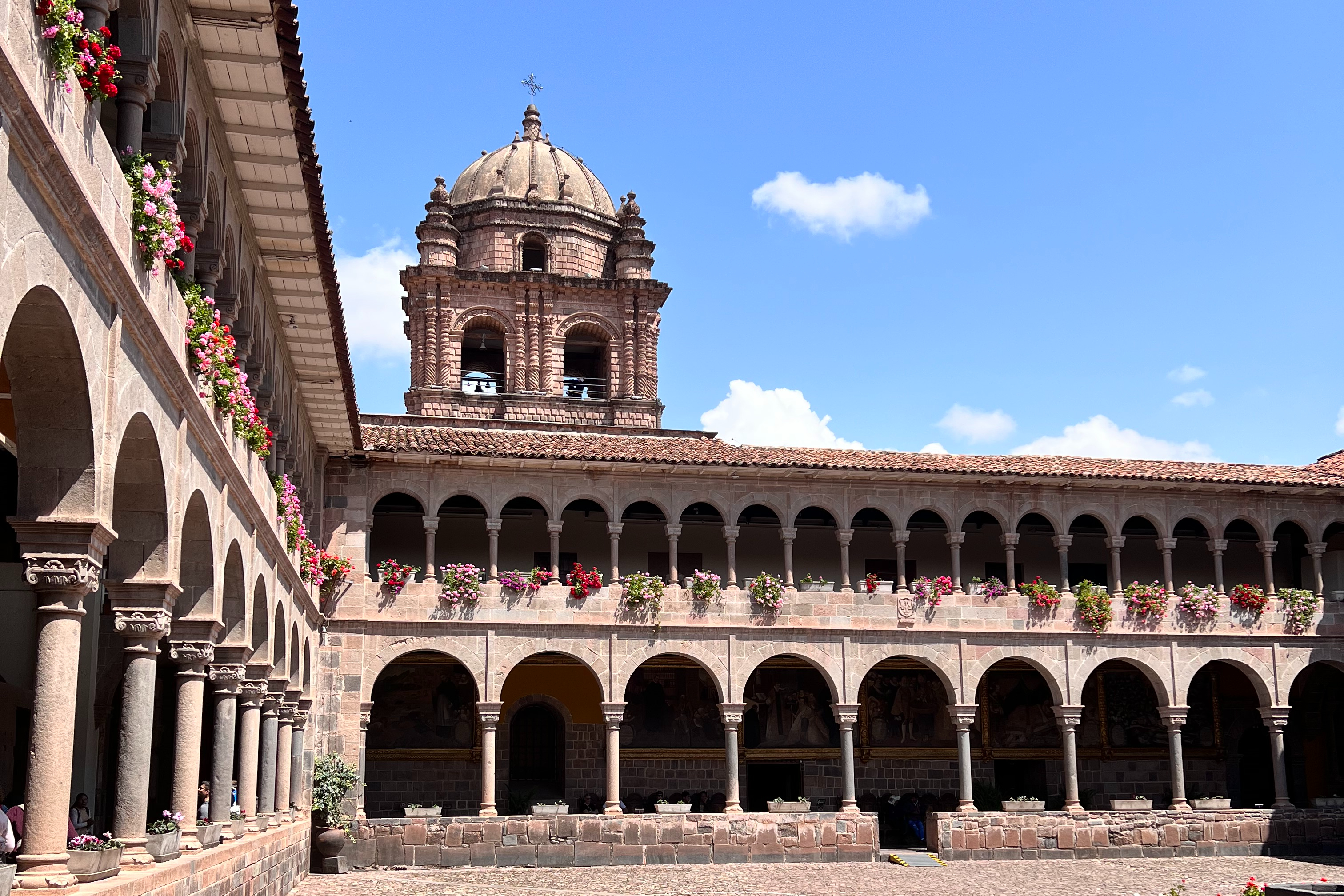
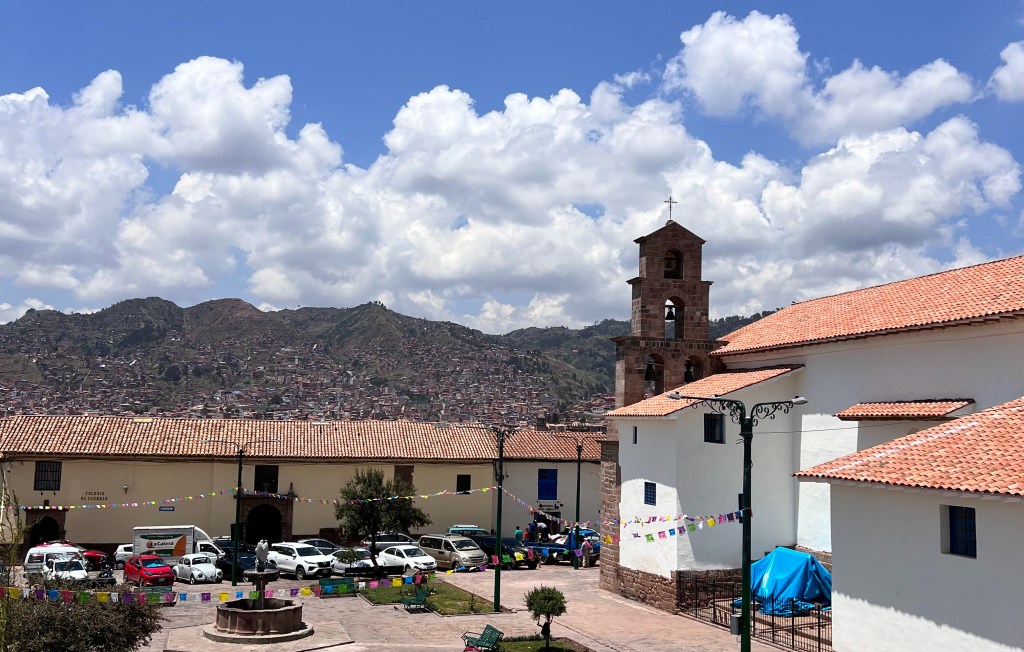
I then continued on to Plaza San Blas. Another square with a small church and a beautiful fountain, which is a little further away from all the tourist hustle and bustle.
As you can see, I had good weather during my stay. Even during rainy season, you can expect plenty of sunshine and warm temperatures during the day. It often only starts to rain in the evening.


I also visited a small Coca Museum at Plaza San Blas. It’s a very interesting exhibition where you can learn more about the importance of the plant in South America and its distribution. In Peru and some other countries, cultivation of the plant is still legal. However, the leaves also have many health benefits and can help with altitude sickness. The narcotic substance is only present in such small quantities in the leaves that they do not act as a drug. Nevertheless, in the museum you will also find instructions on how to extract cocaine (information that I will not pass on to you). Towards the end there is a small shop selling sweets, chocolate and teas made from coca leaves. However, these are less suitable as souvenirs.
Beautiful Views
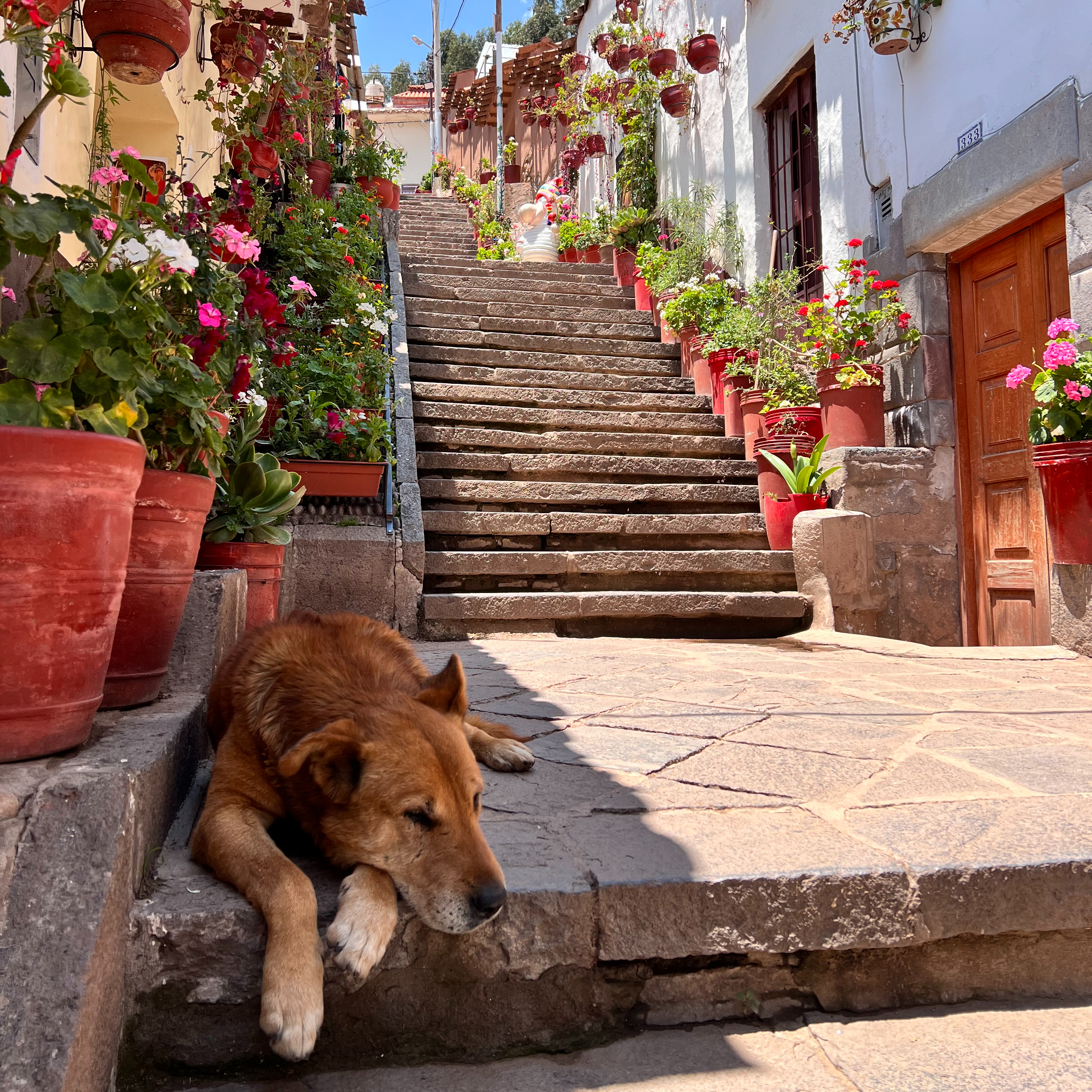
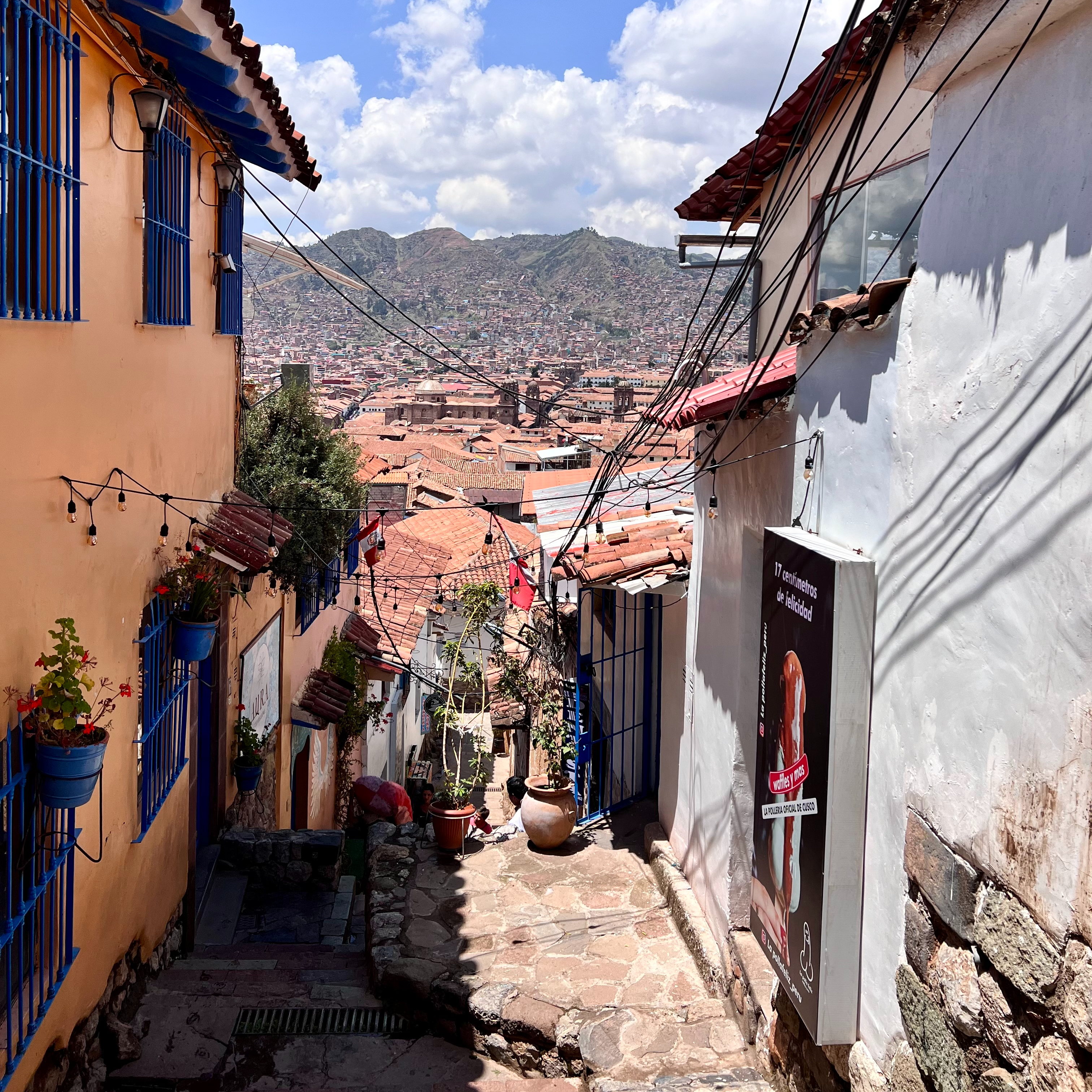
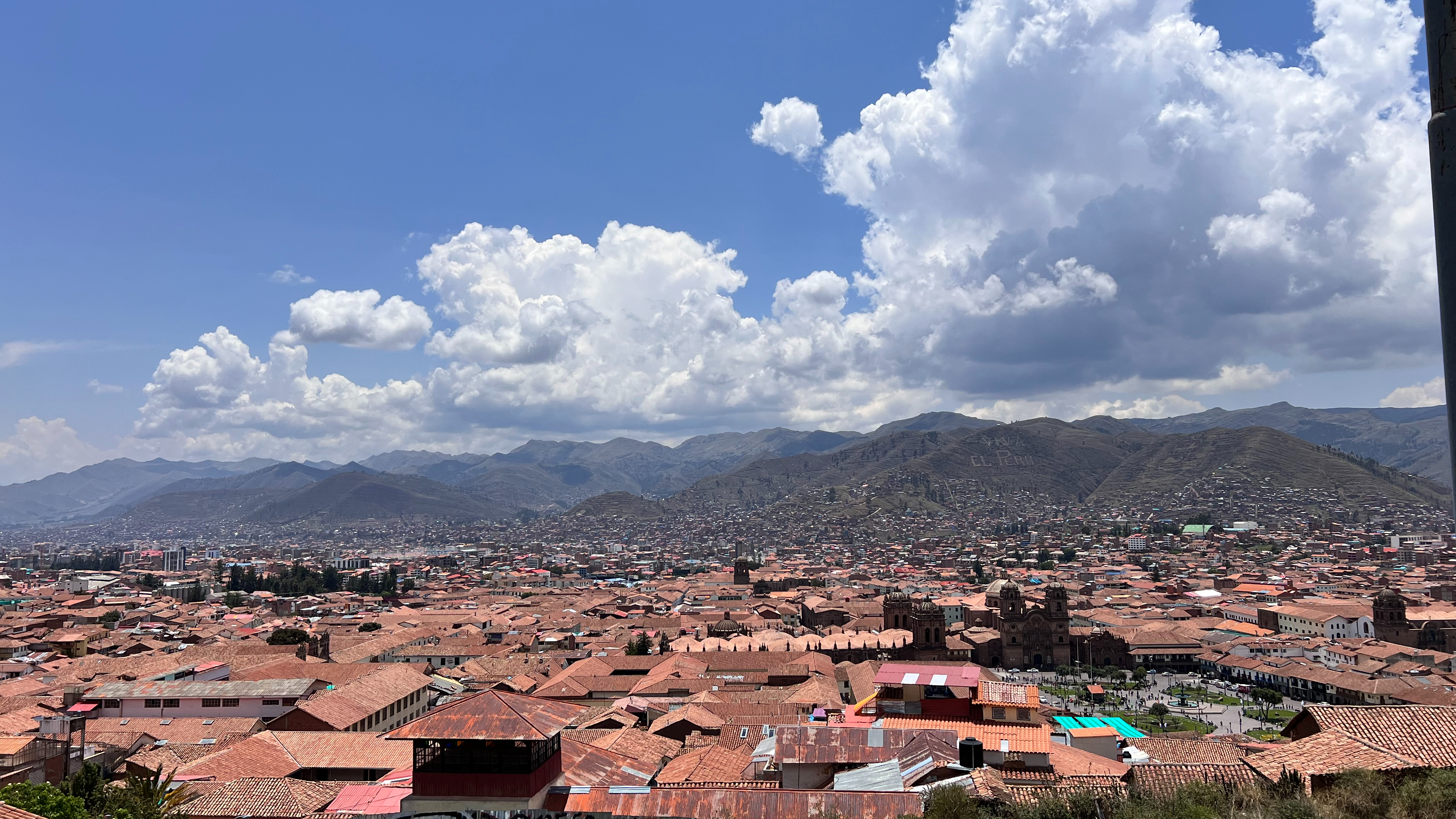
Starting from Plaza San Blas, you can take a short hike up to the hilly neighbourhood of Cusco. Even if one step feels like ten at this altitude, the effort is definitely worth it. From Mirador de San Blas you have a great view over the whole city. You can also stroll along the narrow, cute alleys up there. At some point you will arrive at the Iglesia (church) San Cristobal, from where you can also enjoy a great view.
The Food
After my two Peruvian exchange colleagues explained to me in Chile that food in Peru is not only delicious but also super cheap, I had to test that of course. Along Calle Santa Clara, I found a gate that led to a souvenir market. There is also a small restaurant in the courtyard that offers lunch menus. The „Menu del Día“ (menu of the day) usually comes with a soup, main course and beverage and is usually the cheapest meal option in the entire country (respectively South America).
That day, I had a quinoa soup and a large plate of fish with side dishes. Not only was it super tasty, but I was also more than full afterwards and paid the equivalent of around two dollars. Mission accomplished, I would say.


Non-vegetarians usually take the opportunity to try cuy in Cusco, i.e. grilled or roasted guinea pig. For Peruvians, the dish is mainly served at special occasions. However, it is usually always on offer for tourists. It is said to taste similar to chicken. Never tried it myself.
Preparing for the Next Day
I booked my tour to Machu Picchu in advance via an organisation called Machu Picchu Reservations. The evening before the hike, we met our guide and the other participants in the office at Plaza Regocijo and were given a short introduction as well as tips on luggage and how to prepare for the trip.
Again, we were advised that it would be better to spend several days in Cusco beforehand to acclimatise to the altitude. However, as we had all only recently landed in Peru, our guide recommended that we at least avoid consuming dairy products, white flour and coffee up to and during the trek in order to minimise any negative side effects. In general, you should probably refrain from eating foods and meals that are difficult to digest.
My Conclusion
If I had had more time, I would have loved to stay longer in Cusco. Even though you can easily visit the main attractions in one day, you could easily spend a week or more in the city. Just to soak up the atmosphere and enjoy the surroundings.
Having visited numerous cities in South America, Cusco is still one of my favourites. With its unique architecture, friendly people, warm temperatures and delicious food, this city should be on every travel enthusiast’s bucket list. You will definitely not be disappointed.
In my next post you can read more on my experience on the Inca Trail. Until then,
Bussi Baba!
Also check out my Instagram Reel about Cusco:
 Bussi Baba
Hinterlasse einen Kommentar